TL;DR

Get decor and gifts delivered free with Prime
- Fast, free delivery on millions of items
- Prime Video, Amazon Music and more included
- Member-only deals all year
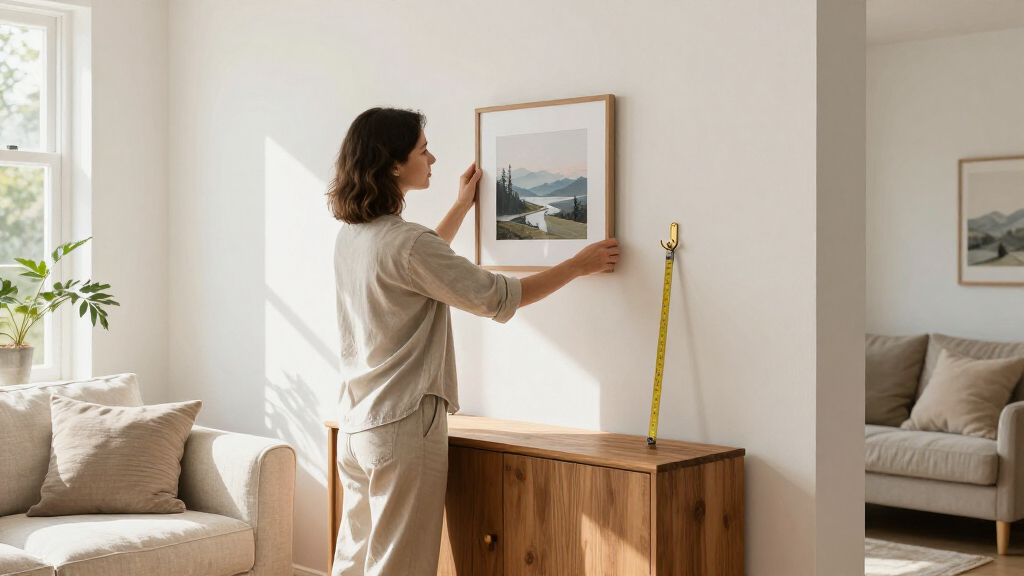
Interior designer David Kaihoi says art at home can be arranged more freely than in a museum, with framing and placement guided by the art and the room. His advice includes testing frames in person, mixing styles for collected walls and matching frames for works displayed as a series.
Interior designer David Kaihoi has shared guidance on framing and hanging art at home, arguing that arrangements should respond to the artwork, architecture, furniture and light rather than follow a fixed gallery formula. In an interview published by Veranda, the Redd Kaihoi partner described ways to choose frames, build a mixed salon wall and decide when a group of works calls for matching frames.
Kaihoi said a frame should draw attention to and complement the work. He recommends looking closely at each piece before choosing a style: a painting may suit a carved gilt frame, while a black frame can compete with some art. The setting matters as well. He offered natural wood as one option for a beach setting and glossy black for a more elevated city interior, while stressing that the choice depends on the individual work.
When possible, Kaihoi advises holding sample frames against the artwork in person. He recalled that a black ink drawing he expected to pair well with a black frame looked better with a raw wood side and silver gilt face. He also suggested considering secondhand frames from auctions, flea markets and antique markets, saying a frame can be worth buying even when its existing artwork is not the reason for the purchase.
For arrangements, Kaihoi recommends matching frames when works are intended to hang together as a series, such as family portraits or similar prints. For a salon wall or pieces displayed in different places, he favors a mix that feels collected rather than overly planned. He also described French matting, an ornamental border around the artwork, as an option for both classical and some contemporary pieces.
Let the Room Guide the Arrangement
Kaihoi’s advice gives homeowners a way to make framing decisions without treating uniformity as a requirement. The approach puts the artwork and the room at the center: a frame can bring out a detail, soften a contrast or compete with the piece, while an arrangement can relate to nearby furniture and the room’s architecture.
That flexibility can also affect cost and sourcing. Kaihoi’s suggestion to look for secondhand frames offers an alternative to ordering every frame new, though the source does not provide price comparisons. His examples point to a practical test: try possible frames with the work before committing, since a pairing that seems right in theory may look different in person.
As an affiliate, we earn on qualifying purchases.
From Installation to Interiors
Kaihoi’s perspective draws on his early work as a fine art installer in New York, where he helped install art for interior designers. He recalled seeing very different approaches: one designer might hang several pictures together, while another might use a single small portrait to anchor a large dining room. Those experiences, he told Veranda, showed him that artwork could be displayed in many ways.
Kaihoi later joined designer Miles Redd’s firm and became a partner in Redd Kaihoi. The design duo has worked on interiors in several locations, including Dallas and Palm Beach, according to the source. Kaihoi said his approach at home differs from museum-style hanging, which he considers appropriate in some settings but not a universal model for residential rooms.
“The gallery hanging approach is meant for a museum, and it has its place, but in the home, I think it can be much more lively, playful, and up for grabs.”
— David Kaihoi, interior designer
Choices Depend on Each Work
Kaihoi’s recommendations are design guidance, not fixed rules. The source does not identify one frame style or hanging arrangement as suitable for every artwork or room, and it does not give measurements for spacing, mounting height or hardware. The best pairing may only become clear when a frame is tested alongside the specific piece.
The supplied source excerpt ends during a section on common framing mistakes. It does not include the full list of mistakes or any further recommendations from that section.
Test Frames Before Hanging
For readers applying Kaihoi’s advice, the next step is to place the artwork beside several frame samples and view the combinations in person. Once the frame is chosen, the arrangement can be planned around the room and whether the work belongs to a coordinated series or a more varied grouping. Veranda’s supplied report does not announce a later milestone or additional publication.
Key Questions
Should art at home be hung like it is in a museum?
Kaihoi says museum-style gallery hanging has its place, but he favors more flexibility at home, where arrangements can respond to architecture, furniture and light.
When should frames match?
Kaihoi recommends identical frames when works are meant to hang together as a series, such as similar prints or family portraits.
How can I tell which frame suits a piece?
Study the artwork and, if possible, hold frame samples against it in person. Kaihoi says some pairings that seem promising at first can compete with the art when viewed together.
Are secondhand frames worth considering?
Yes. Kaihoi says he looks for frames at auctions and flea and antique markets, sometimes buying an item for its frame rather than for the artwork inside it.
Source: rss
Fall Picks
fall essentials
As an affiliate, we earn on qualifying purchases.