TL;DR
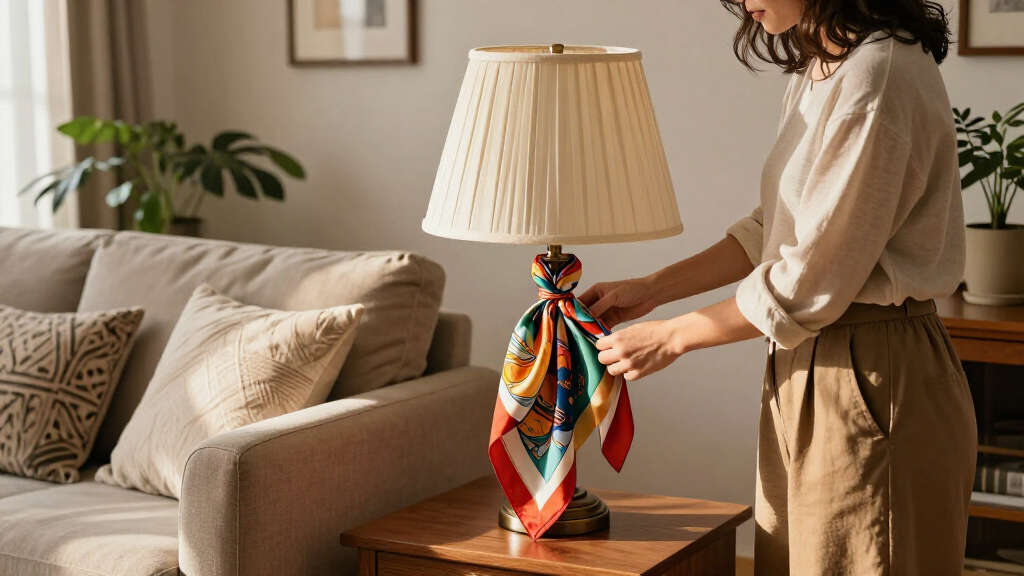
Hunker published a decor idea for using a vintage silk scarf to refresh a lamp, either by tying it around the base or wrapping it around the shade. The report says the scarf should be kept clear of bulbs and other heat-producing parts; it does not provide testing or measurements for the method.
Hunker has reported that a vintage silk scarf can be used to add color and pattern to a plain lamp, either tied around its base or arranged around its shade. The idea offers a way to reuse a clothing accessory and change a room’s decor, but the report warns that fabric must stay clear of the bulb and other heat-producing components because of fire risk.
The report presents the scarf as a reversible decorative addition, not a lamp repair or a permanent alteration. One option is to tie the scarf around the lamp base in a bow or loose knot. Hunker describes that approach as involving less risk than placing fabric near the shade because the base is farther from the bulb.
A second option is to unfold the scarf and wrap it around the lampshade, tying a bow to one side and tucking away loose ends. Hunker says the method may suit square-shaped lamps particularly well, while suggesting that the folding can be adjusted to fit other lamp styles. The report cautions that the fabric must not touch the bulb.
Readers can use a scarf they already own or look for one at a local thrift store, according to the report. It suggests selecting colors that complement the room and swapping scarves for different occasions. The idea is described as suitable for table lamps, floor lamps and wall lights, although the report does not give model-specific instructions or safety testing for those fixtures.
A Reversible Way to Refresh Lamps
The suggestion may appeal to people who want to change a room’s appearance without replacing a working lamp. A scarf can introduce color, pattern and texture, and tying it around the base can leave the shade itself unchanged. Because the accessory can be removed or replaced, the look can also be adjusted as a room’s decor or seasonal decorations change.
The approach also gives an existing textile another use rather than sending it directly to storage or disposal. That practical appeal does not mean every lamp is suited to every scarf arrangement: safe clearance from heat remains more important than the decorative effect. Anyone unable to keep fabric away from a bulb or hot component should avoid putting it on that part of the lamp.
As an affiliate, we earn on qualifying purchases.
From Wardrobe Accessory to Decor
The report frames silk scarves as items that can serve both as fashion accessories and as small decorative accents at home. Its lamp idea follows the same approach as other forms of textile reuse: make a modest, removable change to an existing object instead of replacing it. Hunker also mentions using a scarf on the back of a dining chair or draping one over a side table.
The article gives broad styling suggestions rather than a tested product guide. It does not specify scarf dimensions, fabric construction, lamp wattage, bulb type or a minimum distance from a heat source. Its practical instruction is to keep the material away from the bulb and other components that produce heat, particularly when arranging fabric around a shade.
““Just be careful that your scarf’s material doesn’t come into contact with your light bulb.””
— Hunker
Safety Depends on the Lamp Setup
The report does not identify a tested scarf-and-lamp combination or provide a safe clearance measurement. It also does not explain how heat exposure may vary among bulbs, shades and fixture designs. Its advice is limited to keeping fabric away from the bulb and heat-producing parts; readers should not treat the styling suggestion as a guarantee that a particular setup is fire-safe.
It is also unclear whether a scarf wrapped around a shade would work well with every shade shape or material. Hunker says the technique can be adjusted, but gives no detailed instructions for unusual fixtures, narrow shades or wall lights. The report offers no independent test results or expert safety assessment.
Check Clearance Before Styling
Anyone trying the idea should first decide whether the scarf can be secured without touching the bulb or other heat-producing components. Tying it around the base is the option Hunker describes as keeping fabric farther from the bulb. If wrapping a shade, the material and loose ends should remain clear of the bulb, and the arrangement should be removed if it shifts toward a hot area.
The article does not announce a product, formal project or follow-up testing. Its next step for readers is a styling choice: select a scarf that suits the room, try a removable arrangement and reassess whether it remains safely positioned while the lamp is in use.
Key Questions
What vintage clothing item does the report recommend using on a lamp?
Hunker suggests a vintage silk scarf, tied around a lamp base or arranged around a shade.
Is it safer to tie the scarf around the base or the shade?
Hunker describes tying it around the base as involving less risk because the fabric is farther from the bulb. In either arrangement, keep the scarf away from the bulb and other heat-producing components.
Can a scarf be wrapped around any lampshade?
The report says the folding can be adjusted for different lamp styles and notes that the method may work best on square-shaped bases. It does not provide instructions or testing for every shade design.
Does the report give a safe distance between fabric and bulb?
No. It warns against contact with the bulb and other heat-producing parts but does not give a specific clearance measurement or test results.
Source: rss