
TL;DR

Get decor and gifts delivered free with Prime
- Fast, free delivery on millions of items
- Prime Video, Amazon Music and more included
- Member-only deals all year
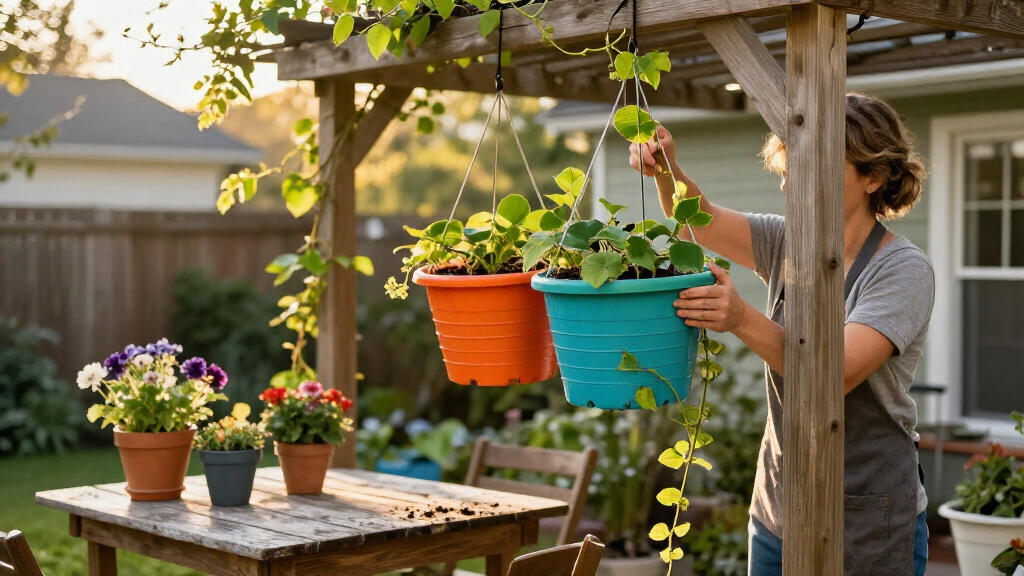
A Hunker report describes an Instagram DIY by Smita Baruah that turns three plastic container lids into tiers for a hanging planter. The project uses small pots, jute string and decorative finishes; the report does not provide cost, durability or environmental-impact measurements.
A gardener has repurposed three plastic container lids as platforms for a tiered hanging planter, in a do-it-yourself project featured by Hunker and attributed to Instagram creator Smita Baruah. The design offers a way to display small plants vertically using household materials, though the report provides no independent testing of its durability or environmental impact.
The project pairs the lids with small circular containers, which hold the plants, and jute string, which suspends the tiers. The instructions call for tracing the pots’ rims at the center of each lid, cutting openings for the pots to sit in, and drilling four holes near the corners for the string. The report says the holes should line up across the lids so the planter hangs evenly.
For decoration, the lids are primed and painted, while the small containers are covered with patterned paper using Mod Podge and then finished with paint around their rims. Four pieces of jute are threaded through the corner holes, with knots beneath the lids to support them. The source says the lids should be positioned with their undersides facing up before the plants are placed in the containers.
Hunker describes the project as suitable for succulents and suggests herbs as another possible use, including hanging the planter near a kitchen work area. The reported materials include a craft blade, scissors, marker, small drill, paintbrush, primer, paint, varnish and patterned paper. The article does not provide measurements for the holes, string lengths or finished planter, so builders would need to adapt the instructions to their own containers.
A Vertical Display From Household Materials
The design addresses a practical problem for people with limited shelf or windowsill space: it uses vertical room to hold several small plants. Repurposing lids that might otherwise be stored or discarded can also make use of materials already on hand, while paint and paper let the maker choose a look suited to a room.
Those benefits are presented as the project’s appeal, not as measured results. Hunker characterizes the planter as inexpensive and sustainable, but gives no price comparison, reuse data or assessment of how long the plastic, string and finishes will last. Readers should treat those descriptions as the report’s framing rather than verified environmental findings.
Popular right now

Vitamix 5200 Professional-Grade Blender, 64 oz. Container, Black

LG 85-inch QNED75B Mini LED Smart TV Bundle with HDMI and CPS Protection Plan

Ninja Foodi 10-Qt DualZone Smart XL Air Fryer, 6-in-1, DZ550
As an affiliate, we earn on qualifying purchases.
How the Lid Planter Is Assembled
The project is a home craft rather than a commercial product announcement. Hunker’s article credits the design to Smita Baruah’s Instagram account and outlines a method that turns three lids into a stack of plant platforms. The small containers sit through openings in the lids, while the jute passes through four corner holes to hold the arrangement together.
The source mentions lids similar in size and shape to those sold with 24-ounce food containers and small pots of about four ounces. These are examples, not stated requirements. The report also notes that the planter can be adapted for different plants and decorative choices, but it does not provide a tested load limit or detailed care guidance for plants placed in the hanging arrangement.
““a sustainable, inexpensive, and fun way to customize your decor””
— Hunker, describing the project
Durability and Safety Details Not Reported
The source does not say how much weight the assembled planter can safely carry, how the knots or drilled lids perform over time, or whether the design was tested with damp soil and repeated watering. It also does not identify the plastic type or establish whether the materials can be recycled after they have been painted or coated.
Further details are absent on drainage, watering frequency, sunlight, and whether the small containers need drainage holes. These factors can affect plant health and may add weight or moisture to the structure. The report also does not give a project date, a cost estimate or a direct statement from Baruah about her methods beyond the instructions attributed to her project.
Adapt the Build to Each Container
Hunker’s instructions leave the project open to individual adjustments in pot size, paint and paper pattern. Anyone attempting it would need to check that the containers fit securely, the four holes align and the string supports the intended load before hanging plants. The source offers no follow-up testing or announced next step for the design, so further performance claims remain unverified.
For a finished planter, readers can follow the steps in the Hunker report while taking account of their own materials and plants. Because the project involves a craft blade and drill, those tools should be handled carefully and used with appropriate eye protection; the source does not provide a formal safety assessment.
Key Questions
What materials does the hanging planter use?
The reported design uses three plastic lids, small containers for the plants and jute string. Primer, paint, patterned paper and Mod Podge are used for decoration; the instructions also call for a drill and craft blade.
How are the plant containers held in place?
An opening is cut in the center of each lid so the small container’s rim rests within it. Four corner holes in each lid carry the jute string, with knots beneath the lids acting as supports.
Which plants can go in the planter?
Hunker says the maker used succulents and suggests herbs as another option. The report does not give plant-care or drainage guidance, so those details depend on the containers and plants selected.
Has the planter’s strength or environmental impact been tested?
The source reports no load testing, durability results, cost comparison or measured environmental impact. Its descriptions of the project as inexpensive and sustainable are not accompanied by supporting figures.
Source: rss