TL;DR

Get decor and gifts delivered free with Prime
- Fast, free delivery on millions of items
- Prime Video, Amazon Music and more included
- Member-only deals all year
Home decorator and Ideal Home contributor Grace H has shared advice for making rooms feel more collected, including mixing furniture, metals and colours rather than relying on matching sets. Her suggestions include moving existing pieces between rooms and using a favourite cushion, artwork or rug to build a colour palette.
Home decorator Grace H has shared advice on breaking away from coordinated furniture sets and tightly matched colour schemes, arguing that mixing finishes, materials and shades can help a room feel more personal. The guidance appeared in an Ideal Home Open House contribution, where H recommends starting with changes to existing furnishings rather than replacing them.
H’s first suggestion is to break up furniture sets by moving pieces into different rooms. A dining table from a farmhouse-style set, for example, could be paired with more modern chairs; in a bedroom, a chest of drawers in a different material or finish could sit alongside existing bedside tables. She says this approach does not require throwing away furniture or buying a complete replacement set.
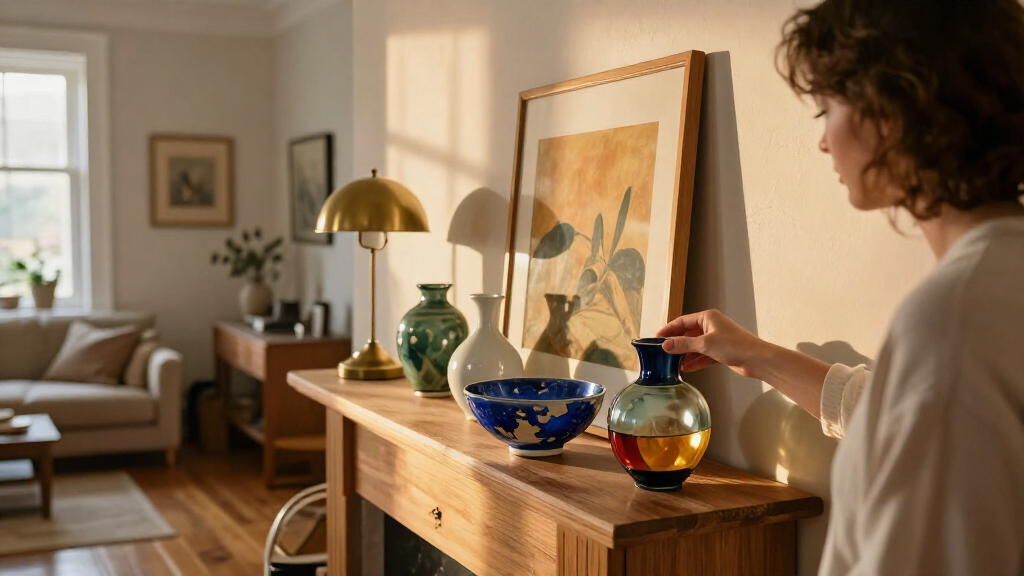
She also encourages mixing metals and textures, including combinations such as brass with chrome or bronze with nickel. Alongside furniture, H advises treating a room’s initial two-colour scheme as a starting point, not a strict limit. Her own peach-and-mint office includes yellow blinds, a red sofa and a pink frame around colourful artwork.
For people unsure how to combine colours, H points to familiar colour-wheel approaches: neighbouring colours such as red, orange and yellow; contrasting colours such as green and red; different tones within one colour family; or three colours spaced around the wheel, such as red, blue and yellow. She presents these as starting points for building confidence, not rules every room must follow.
Make Existing Furniture Work Differently
The advice offers a low-cost way to refresh a room: rearranging furniture and experimenting with smaller colour accents can change the feel of a space without requiring a full redesign. H explicitly cautions against turning the process into a reason to discard everything or take on unnecessary work.
For readers facing conflicting decorating messages—whether to coordinate every item or mix everything—her central point is that a room does not have to follow one rigid formula. A repeated colour or material can connect varied pieces, while differences in finish, tone and style keep the result from feeling like a showroom display. That is decorating guidance, rather than a claim backed by a formal study.
As an affiliate, we earn on qualifying purchases.
From Matching Sets to Mixed Rooms
H describes growing up in the 1980s with the expectation that home accessories should match a chosen scheme closely. In her account, cushions, lampshades and decorative objects were selected in the same shades, sometimes from the same shop. She contrasts that approach with the range of style language now circulating on social media, including calls for eclectic rooms alongside prescriptive shopping lists.
The article is a personal decorating contribution, not a report on a new industry standard or a research finding. H writes as an Ideal Home Open House contributor and content creator, sharing her own preferences and examples. The source material provides no survey data on how common matching furniture sets are, or on how readers respond to her suggestions.
“Please don’t.”
— Grace H, Ideal Home contributor
No One-Size-Fits-All Palette
H’s examples reflect her own taste and experience; the article does not establish that particular colour combinations will suit every home, room or reader. It also offers no objective measure of when a space counts as “collected” rather than simply mixed.
The source gives no budget estimates, product recommendations or technical guidance on paint selection, lighting or room dimensions. Readers would need to adapt the suggestions to their furnishings and preferences. The article’s final passage is cut off in the supplied source after the line about cushions and curtains, so no further guidance from that ending can be confirmed here.
Start With One Favourite Piece
H’s suggested first step for readers who feel overwhelmed is to choose a cushion, artwork or rug they already love, then use its colours as a loose palette. She proposes identifying a less prominent shade in the item and repeating it elsewhere—for example, on a wall or sofa—before adding other colours from the same piece around the room.
From there, readers can try rearranging furniture they already own, introducing a different finish or adding a small accent colour. The source does not announce a product launch, event or follow-up date; the next step described is a gradual, personal approach to decorating rather than a scheduled development.
Key Questions
What does Grace H mean by the “match-match” trap?
She is referring to a room where furniture and accessories closely match in colour, finish or source. H suggests that varying materials, styles and shades can make a room feel more individual.
Do I need to replace matching furniture?
No. H recommends trying to move pieces between rooms or pairing them with furnishings in a different style or finish before considering new purchases.
How can I choose colours if I am unsure where to start?
H suggests using a favourite cushion, artwork or rug as a palette guide. She also points to colour-wheel combinations, such as neighbouring colours, contrasting colours or different tones of one colour.
Do the colours in a room need to match exactly?
H’s advice is that they do not. A shared colour thread can link different shades and furnishings without requiring every item to match precisely.
Source: rss
Fall Picks
fall essentials
As an affiliate, we earn on qualifying purchases.