
TL;DR
New York City renter Angelie Xiong used contact paper, paint and a peel-and-stick backsplash to turn a gray studio kitchen into a red nook. The Apartment Therapy report describes her approach, including a workaround for an uneven backsplash; the project’s cost and landlord approval details were not provided.
New York City renter Angelie Xiong used removable cabinet covering, a painted section of wall and a layered peel-and-stick backsplash to turn the kitchen in her studio apartment from what she called “boring millennial gray” into a red-toned nook, according to an Apartment Therapy report. The makeover offers a specific example of how a renter can change a kitchen’s appearance without replacing its cabinets or appliances, though the report does not detail the project’s total cost or whether the landlord approved each modification.

Give the gift of listening to the book lover on your list
- Choose a 1-, 3-, 6- or 12-month membership
- They pick the audiobooks they love
- Easy to send by email
Xiong said she had left the kitchen alone for almost a year because she expected a makeover to take too much work. After living in the apartment for about a year, she decided to act. Before making physical changes, she used Gemini AI to visualize possible color schemes, the report said. She chose burgundy and deep red, colors she said she had long gravitated toward.
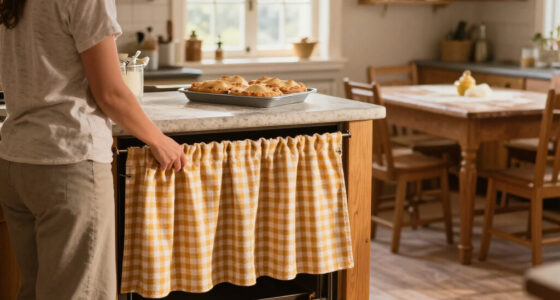
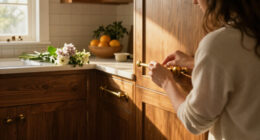
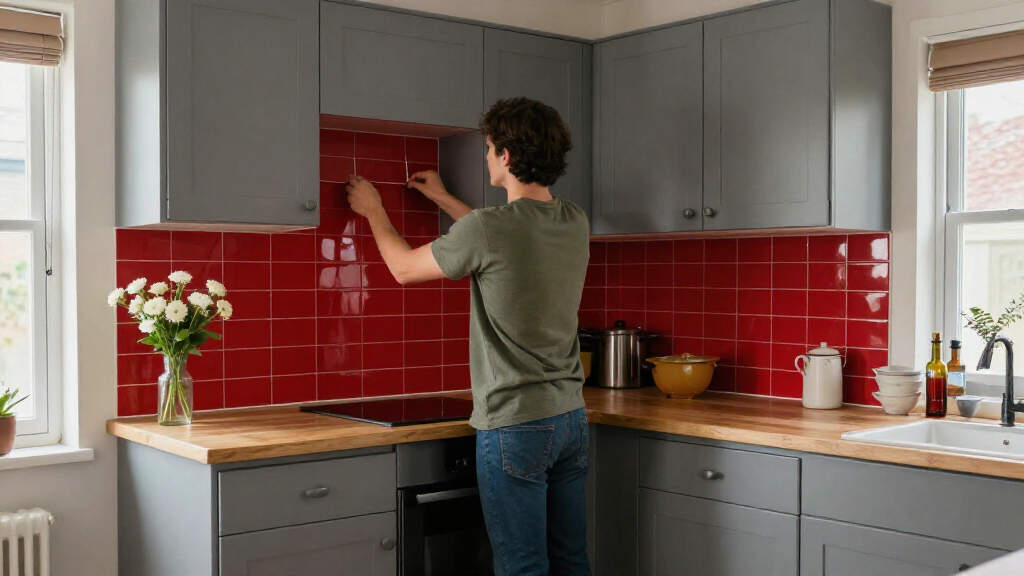
She covered the cabinet doors with brick-red peel-and-stick contact paper and painted the main wall behind the cabinets in Behr’s “Moroccan Ruby.” Rather than paint the entire room, she limited the color to the kitchen area, creating what she described as a nook. She also replaced the cabinet handles with gold ones and added a cafe curtain in front of the dishwasher to cover its stainless-steel front and add texture.
The backsplash took more planning because the original surface was not smooth enough for peel-and-stick tiles to adhere directly. Xiong said she cut thin PVC boards to fit the existing backsplash, attached the boards to it, and applied cinnamon-red, three-dimensional peel-and-stick tiles to the boards. She had considered metal sheets and plywood, but said metal was expensive and plywood too thick. The report does not state whether the additions can be removed without damage or provide product costs.
A Colorful Kitchen Without New Cabinets
The makeover shows how surface treatments and small hardware changes can alter the look of a rental kitchen without a full renovation. Contact paper, a limited area of paint and a curtain changed the room’s color and visual texture, while the original cabinets and dishwasher remained in place.
For renters, the story is also a reminder that “renter-friendly” describes a project approach, not a guarantee that every material is removable or permitted by a lease. Xiong’s backsplash solution involved attaching boards to the existing surface, and the report does not explain the adhesive used, the condition of the wall afterward, or any landlord requirements. Readers considering a similar project would need to check their lease and test materials before applying them.
The result also reflects a design choice rather than a documented measure of property value or savings. Apartment Therapy did not report a budget, a comparison with professional renovation costs, or evidence that the changes increased the apartment’s resale or rental value. The confirmed takeaway is narrower: Xiong said the bold color felt distinctive while remaining contained to the kitchen nook.
Popular right now

Hisense 55-Inch E6SR Series 4K UHD Hi-QLED Roku Smart TV (2026 Model)

Shark Pet Cordless Stick Vacuum IX141

De'Longhi Classic Signature Espresso Machine with Adjustable Milk Frother
As an affiliate, we earn on qualifying purchases.
From Gray Kitchen to Red Details
According to Apartment Therapy, Xiong had lived in her New York City studio for roughly a year before starting the makeover. She said she had postponed it for months because of the anticipated effort, with the uneven backsplash among the obstacles that gave her pause. Her earlier experience wrapping bathroom cabinets with contact paper helped her approach the kitchen cabinet doors.
The sequence combined visual planning and practical adaptation: she used an AI image tool to explore color ideas, chose red tones, applied contact paper to the cabinet fronts, and painted only the wall behind them. The backsplash required a separate workaround because the surface was not flat. She selected PVC boards as a base for the tiles, describing them as thin, light and affordable compared with options she had considered. These details come from the homeowner’s account in Apartment Therapy; the report does not independently test the products or installation.
Xiong said she still wanted to find artwork for the empty wall across from the nook. The article presents the kitchen as a personal before-and-after project, not a formal renovation or a documented cost breakdown.
““One day I just decided that I’m gonna do something about it.””
— Angelie Xiong, as quoted by Apartment Therapy
Costs, Permission and Removal Remain Unknown
The Apartment Therapy report gives no total project budget, despite describing some materials as affordable. It also does not say whether Xiong sought or received landlord permission for painting, gluing boards to the backsplash, or applying contact paper. The exact adhesives and removal process are not specified, so the report does not establish whether the changes can be reversed without leaving marks or surface damage.
There is no independent assessment of the installation’s durability, heat resistance, or performance around cooking and moisture. Xiong said she was still seeking artwork for the wall across from the nook, but the article does not report a completion date or any later update on the kitchen.
Artwork Is the Planned Finishing Touch
Xiong told Apartment Therapy she was still looking for an art piece for the empty wall across from the red nook, which she hoped would complete the room. The source does not give a timeline for that addition or announce further renovation plans.
For now, the reported project is a completed set of kitchen surface and hardware changes, with the artwork search still open. Any broader claims about cost savings, reversibility or renter permissions remain unverified by the source material.
Key Questions
What changes did Angelie Xiong make to her rental kitchen?
She covered the cabinet doors with brick-red contact paper, painted the wall behind them Behr’s “Moroccan Ruby,” replaced the cabinet handles with gold ones, and added a cafe curtain to the dishwasher. She also installed cinnamon-red peel-and-stick tiles over PVC boards fitted to the existing backsplash.
How did she handle the uneven backsplash?
Xiong said the original backsplash was not smooth enough for tiles to stick directly. She cut thin PVC boards to fit its shape, attached the boards to the backsplash and applied peel-and-stick tiles on top.
How much did the kitchen makeover cost?
The Apartment Therapy report does not provide a total cost or itemized prices. Xiong described the PVC boards as affordable, but no project budget was reported.
Did the landlord approve the changes?
The report does not say whether Xiong obtained landlord approval. Renters should check their lease and ask their landlord before painting or attaching materials to surfaces.
Is the kitchen makeover fully reversible?
The source describes the project as renter-friendly but does not document how the materials were removed or whether they left damage. It does not establish that every part of the makeover can be reversed without affecting the kitchen surfaces.
Source: apartmenttherapy.com