
TL;DR
A Family Handyman report explains that common barricade colors carry different safety messages: red signals danger, yellow warns of physical hazards, and orange often marks construction or equipment hazards. Roadwork barricades follow separate traffic-control standards, and a color’s meaning can depend on where it is used.
A Family Handyman report has outlined how construction barricade colors signal different hazards, workplace information and traffic changes, drawing on rules and guidelines from OSHA, ANSI and the Federal Highway Administration. The practical takeaway is that colors are not interchangeable: a red danger sign, yellow caution tape and orange road barrier can each carry a different message, and the setting matters.

Get decor and gifts delivered free with Prime
- Fast, free delivery on millions of items
- Prime Video, Amazon Music and more included
- Member-only deals all year
In workplace settings, red identifies danger and can mark emergency stops or fire-protection equipment. OSHA’s general-industry safety-color rule also calls for red warning lights at barricades and temporary obstructions. A red “Danger” sign at a construction site may flag exposed electrical equipment or another hazard capable of causing serious injury, according to the report.
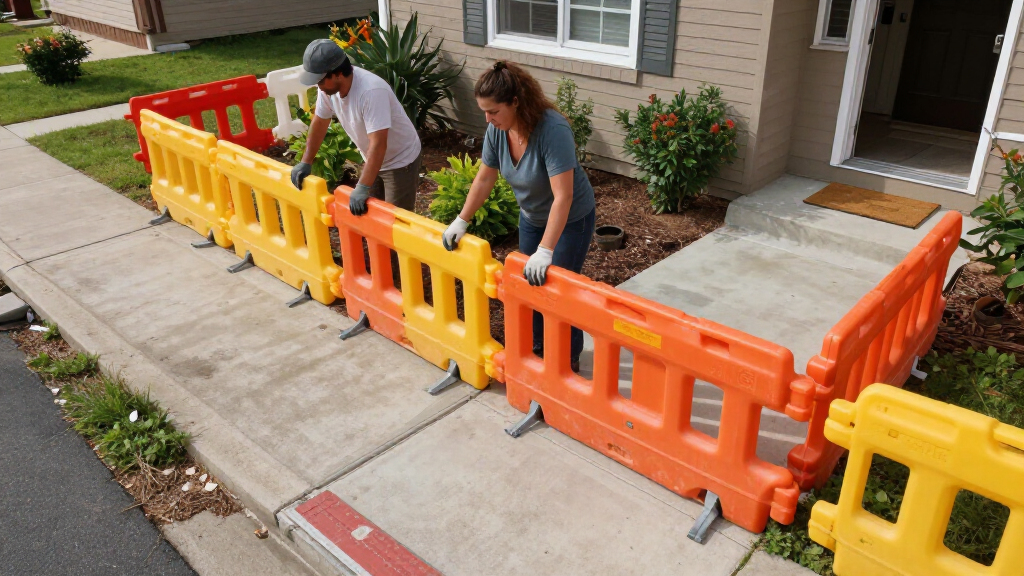
Yellow signals caution about physical hazards, including falls and falling objects. It is commonly used on caution tape and warning signs around active work, damaged walkways or maintenance areas. Orange workplace signs often identify hazards that could cause serious injury, particularly around machinery or equipment being repaired. On roads, orange barriers and signs alert drivers to construction, lane changes and other temporary traffic conditions.
Other colors can provide information rather than tell people to stay away. Green signs can identify first aid or emergency equipment and provide safety instructions. Blue notices typically communicate workplace procedures or equipment information, such as a machine being out of service. Purple or magenta appears in certain radiation warnings, generally as the radiation symbol on a yellow background, the report says.
Reading Barriers Around Work Zones
Recognizing the color and the setting can help workers and the public understand what a barrier is meant to communicate. Red and yellow warnings can signal serious or physical hazards in a workplace, while orange roadwork devices tell drivers that the usual traffic arrangement may have changed. Green and blue signs can instead point to resources or relay instructions.
The distinction matters because a color alone does not explain every hazard or tell a person precisely what action to take. Readers should also follow the sign’s wording, symbols, barrier placement and directions from traffic-control devices. The report’s account is a guide to common uses, not a claim that every barricade of a given color has an identical meaning in every location.
Popular right now

Vitamix Touch & Go Advance 32-Ounce Bar Blender, White

De'Longhi Classic Signature Espresso Machine with Adjustable Milk Frother

KitchenAid Artisan 5-Quart Tilt-Head Stand Mixer, Almond Cream
As an affiliate, we earn on qualifying purchases.
Different Rules for Roads and Worksites
The color system is not governed by one universal rulebook. The report cites OSHA regulations covering workplace safety colors, signs and tags, and radiation warnings. It also references ANSI Z535.1-2022 on safety colors and Z535.5-2022 on safety tags and barricade tape. For road construction, it points to the FHWA’s Manual on Uniform Traffic Control Devices, 11th Edition with Revision 1.
That division helps explain why an orange-and-white striped highway barricade should not be read exactly like an orange workplace warning sign. Road barriers are used to close lanes or roads and route traffic around work. According to the report, when a striped barricade directs drivers around an obstruction, the diagonal stripes slope down toward the side traffic should pass.
Where Color Meanings Can Vary
The report cautions that the same color may serve different purposes depending on location and the standards governing the site. It does not provide a state-by-state or municipality-by-municipality comparison, so it does not establish that every local work zone applies each color in precisely the same way. Nor does it list every possible sign, tape or barrier design.
The cited standards identify the basis for common uses, but the report does not reproduce their full requirements. The precise meaning of a particular barricade may depend on its wording, symbol, placement and whether it is part of a workplace or a public-road traffic-control setup.
Check the Sign and Traffic Pattern
For anyone approaching a work area, the report’s guidance is to read the complete sign and follow the barrier’s directions rather than relying on color alone. Drivers should watch for lane closures, detours and stripe direction; workers and visitors should heed posted hazard warnings and instructions. The report does not announce a new rule or an upcoming standards change. Its cited framework includes the existing OSHA, ANSI and FHWA materials.
Key Questions
What does red mean on a construction barricade or sign?
Red generally identifies danger in workplace safety settings and may mark emergency stops or fire-protection equipment. A red “Danger” sign can warn of a hazard capable of causing serious injury.
What do yellow caution tape and orange barriers mean?
Yellow warns of physical hazards, such as falls or falling objects. Orange workplace signs often flag hazards around machinery, while orange road barriers and signs commonly mark construction and temporary traffic changes.
What do green and blue safety signs indicate?
Green signs can point to safety resources, including first aid or emergency equipment. Blue notices typically provide information about workplace equipment or procedures rather than warn of an immediate hazard.
Why do some road barricades have orange-and-white stripes?
Roadwork barricades use stripes as part of traffic-control arrangements for closures and detours. The report says that, when a barricade directs traffic around an obstruction, the diagonal stripes slope down toward the side drivers should pass.
Does a barricade color mean the same thing everywhere?
Not necessarily. Workplace and roadwork devices follow different standards, and the report says a color’s purpose can vary by location. Read the sign, symbols and directions along with the color.
Source: rss