TL;DR

Get decor and gifts delivered free — and shop member deals
- Fast, free delivery on millions of items
- Access to Prime Big Deal Days deals on October 6–7
- Prime Video, Amazon Music and more included
Decorative throw pillow sets are coordinated groups of accent pillows that add color, texture, pattern, and comfort to sofas, beds, and chairs. To choose well, measure your furniture, check whether inserts are included, compare fabric and care details, and mix a shared palette with varied patterns or textures.
A sofa can look completely different with two well-chosen pillows: suddenly the plain gray upholstery has a warm, layered look, like a room that has finally found its favorite sweater. But a beautiful product photo can hide a too-small size, missing inserts, or fabric that needs more care than your household can give it.
Decorative throw pillow sets make it easier to bring color, texture, and pattern into a room, but “coordinated” does not have to mean identical. You’ll learn how to choose the right size, tell covers from filled pillows, build an arrangement that feels intentional, and compare value beyond the price tag. The aim is simple: a room that looks pulled together and a sofa you can still sit on.
Measure your sofa, chair, or bed before choosing among common 18-, 20-, and 22-inch pillow sizes.
Check whether a set includes filled pillows or covers only, and compare the total cost with any inserts you need.
Build a coordinated arrangement with a shared palette, varied pattern scales, and a mix of solids or textures.
Choose fabric and care requirements to suit your household, and buy outdoor-rated pillows for outdoor exposure.
Judge value by the pieces, dimensions, materials, construction, and upkeep—not only by the bundle price.
What Do You Actually Get in a Pillow Set?
Decorative throw pillow sets are coordinated groupings of accent pillows that add color, texture, pattern, or comfort to furniture. Most bundles contain two or four pillows, but some include covers only, so check the package contents before you buy. Coordination can come from a shared color or fabric rather than identical designs.
That distinction matters when you compare prices. Imagine finding a set of two striped covers for a low price, then opening the box and realizing you still need inserts. The bundle may be a good deal if you already have the right-size inserts in a closet; otherwise, the final cost includes another purchase. Inserts also affect the look: a cover can appear flatter or less structured if its insert is undersized, while the right fit helps it hold its shape. Consider the total cost and the finished appearance, not just the advertised price.
Read the product details for the number of pieces, dimensions, materials, and whether the inserts come with the covers. Check whether covers have zippers, too. A removable cover can be easier to clean than a permanently filled pillow, but it still needs to follow the maker’s care instructions. A zipper is useful only if you can remove the insert easily and clean the cover in a way that suits your routine.
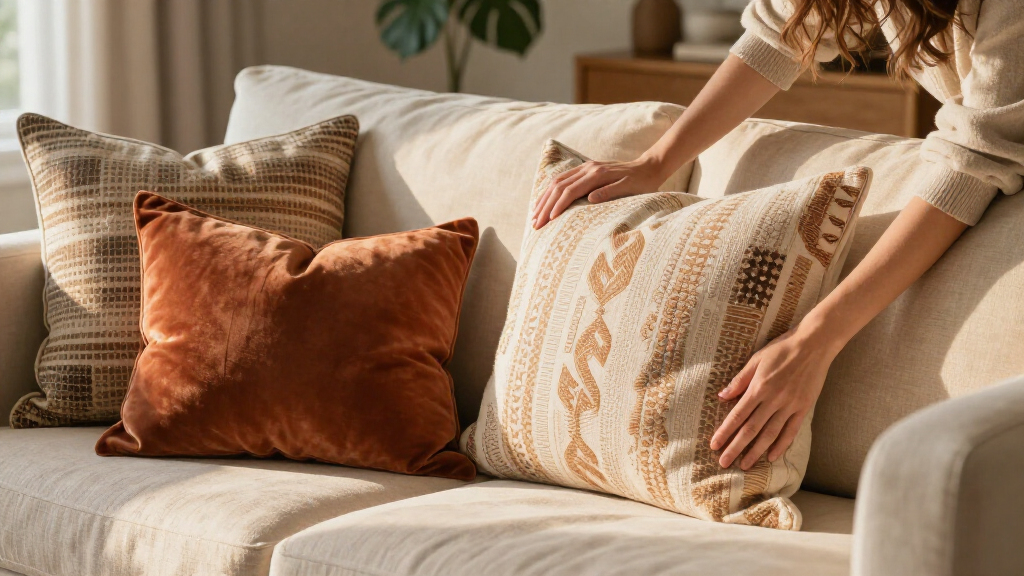
Think of a set as a starting point, not a rulebook. If two pillows share a muted green and one adds a cream-colored texture, the group can feel coordinated without looking like a hotel display. Sets commonly include matching or complementary pieces, and you can mix in a pillow you already own. That flexibility can save money and make the arrangement feel more personal, as long as the added pillow relates to the set through color, texture, or scale.
decorative throw pillow sets with inserts
As an affiliate, we earn on qualifying purchases.
As an affiliate, we earn on qualifying purchases.
How Do You Pick Pillow Sizes That Fit Your Sofa or Bed?
Decorative throw pillow sets look best when their size suits the furniture: common square options include 18 × 18, 20 × 20, and 22 × 22 inches. Larger pillows can anchor a deep sofa or bed, while smaller ones leave a compact chair more room to breathe. Measure before you order because size affects both the visual balance and the amount of usable seat space.
- Measure the furniture. Note the usable width and depth of the seat or bed, not just the outside dimensions. Arms, cushions, and sloped backs can reduce the space where pillows will actually sit.
- Check the listing. Confirm whether the dimensions refer to the cover or finished pillow, and look for any measurement notes. A cover’s dimensions describe its flat size, so the filled pillow may look different once the insert is inside.
- Plan for comfort. Leave enough open seat space for people to sit without constantly moving pillows. A fuller-looking sofa can be appealing, but too many large pillows turn decoration into a daily chore.
- Choose an insert fit. Follow the cover maker’s guidance; an insert slightly larger than the cover can give some pillows a fuller look. The tradeoff is that an overly large insert can strain seams or make a firm pillow less comfortable.
For example, two 22-inch pillows may look handsome against the arms of a deep sectional, but they can swallow most of a narrow apartment loveseat. On a bed, larger pillows at the back can create a steady base for smaller accents in front. Proportion matters more than choosing the biggest size on offer: a pillow should be large enough to read as an intentional accent but not so large that it overwhelms the furniture.
Insert fit depends on the cover’s fabric and construction. A sturdy cover may hold a full insert neatly, while a stiff or delicate fabric can pull at its seams if you force in something too large. A fuller insert may also make a pillow look more tailored, but can make it firmer and less easy to lean against. When in doubt, check the product guidance before ordering.
How Can You Mix Colors and Patterns Without Visual Clutter?
Decorative throw pillow sets coordinate most easily when you repeat a small number of colors and vary the pattern scale. Start with a dominant color, add a supporting shade, then use a smaller accent sparingly. A solid, a large-scale print, and a fine pattern can create layers without making the sofa feel busy because each pillow has a different visual role.
Try this with a navy sofa: choose two pillows that pick up a warm cream from the rug, then add a smaller patterned pillow with a little rust or ochre. The navy connects the arrangement to the couch; the cream brightens it; the warmer accent gives your eye somewhere to land. Repeating colors elsewhere in the room makes the pillows feel part of the overall scheme rather than an unrelated splash.
Texture helps when you want variety without adding more colors. Linen-look fabric can feel relaxed, velvet gives a soft, low sheen, and a nubby weave adds a tactile surface you can see across the room. These differences create depth even in a restrained palette, though the effect depends on lighting and how the room is used. Current home styling often uses natural-looking textures and earthy, muted shades, but those are directions to borrow—not rules that outlast your taste.
A common mistake is buying a large group of pillows with competing prints and no shared color. When patterns are similar in scale and contrast, they compete for attention; a solid or quieter texture can give the eye a place to rest. Before checking out, compare each choice with the sofa and one nearby item, such as a rug or throw. If the colors repeat but the patterns differ in scale, the arrangement usually feels more considered than a row of identical pillows.
Which Fabrics Make Sense for Your Everyday Life?
Decorative throw pillow sets should match the way you use a room, not just the look you want in a product photo. Cotton and linen blends often suit a casual, natural style; velvet adds a plush surface; synthetics are often selected for durability and simpler care. These are broad tendencies, not guarantees: construction, finish, and the maker’s care instructions all affect how a particular cover wears and cleans.
Think about an ordinary Tuesday, not just a tidy living room. If a dog naps on the sofa and a child snacks nearby, removable covers and clear cleaning instructions may matter more than delicate embroidery. Frequent washing can also affect color and texture over time, so a washable cover is most helpful when the fabric is designed for that care. No fabric is immune to spills, friction, pet claws, or fading, so match expectations to your household.
For a quieter room used mostly for reading, a velvet accent may be a lovely choice: it catches the light and feels soft under your hand. That same surface may need more careful handling than a sturdy woven cover. A linen-look option can feel more relaxed, but the care label still decides whether you can machine-wash it. The practical tradeoff is choosing between a particular look and the effort needed to keep it looking that way.
Outdoor pillows need a separate check. Indoor decorative pillows are usually not designed for long exposure to sun or weather, which can cause materials to fade or deteriorate. Choose products specifically labeled for outdoor use, and confirm that both the fabric and filling suit that setting. Even outdoor-rated products may need protection or routine care, so bring them in or store them as directed when they are not in use.
How Many Pillows Should You Use—and How Should You Arrange Them?
Decorative throw pillow sets should leave your sofa comfortable as well as attractive: a small couch often looks balanced with two or three pillows, while a larger sofa can handle more. The right count depends on the furniture’s scale and how much room people need to sit. More pillows can add color and make a large sofa feel less bare, but they also take up usable space and may need to be moved whenever someone sits down. No arrangement is worth clearing off every time you want to relax.
Try a simple setup on a three-seat sofa: place one larger pillow at each end, then add a smaller accent near one side rather than forcing perfect symmetry. This gives the ends visual weight while leaving the center available; the smaller pillow adds variation without making the whole sofa feel crowded. On a compact chair, one well-scaled pillow may be enough. On a bed, larger back pillows can support smaller accent pillows in front, giving the arrangement depth without a pile that falls over each morning.
Sets of accent pillows used to anchor both ends of a sofa can make the room feel balanced, while a third pillow with a different texture adds a softer, less matched finish. That works well, except when the sofa is shallow or the seats are narrow; then even a few oversized cushions can crowd the people who use it. Symmetry can feel orderly, while an intentionally uneven arrangement often feels more relaxed. Choose based on the room’s style and how much seating you are willing to trade for decoration.
Before you settle on a layout, sit down and test it. If the pillows slide onto the floor or block the seat, remove one or choose a smaller size. Consider where people naturally sit and whether a pillow stays put against the back cushion. A comfortable arrangement should look welcoming from across the room and feel easy to use up close.
How Can You Tell Whether a Pillow Set Is Good Value?
A good-value pillow set earns its price through the pieces, materials, dimensions, construction, and care you actually receive—not through the bundle price alone. Compare the number of pillows, whether inserts are included, fabric details, and cleaning needs before deciding. A cheap cover-only set can cost more than it first appears, but a higher price does not automatically mean better construction or a better fit for your home.
Picture two listings for a living-room refresh. One costs less but offers two covers with no inserts and spot-clean-only instructions. The other costs more and includes filled pillows with removable covers. The second may be the easier purchase for someone starting from scratch, while the first may suit a shopper who already owns matching inserts. The better value depends on what you already have and whether you can live with the care requirements; compare the final cost and effort for your situation.
| What to compare | Why it matters | What to check |
|---|---|---|
| Pieces and inserts | The set price may not include everything you need. | Count pillows and confirm whether inserts are included. |
| Dimensions | Scale affects comfort and appearance. | Compare listed sizes with your furniture and existing inserts. |
| Fabric and construction | Feel, wear, and upkeep vary by material. | Read fabric details, seam notes, closure type, and care instructions. |
| Use and setting | Indoor and outdoor products have different demands. | Look for an outdoor rating if the pillows will face the elements. |
Look closely at seams, stitching, closures, and care notes. A zipper is useful only if the cover can be removed and cleaned in a way that suits you. Construction details can give clues about everyday usability, but they do not replace checking the dimensions and care instructions. When you compare options, count the work as well as the dollars: a set that needs special care may not be a bargain for a busy family room, even if its initial price is attractive.
What Should You Check Before Ordering and After the Pillows Arrive?
Before you order, confirm the dimensions, included pieces, materials, and cleaning instructions; after delivery, check the stitching and try the pillows in the room. This quick routine catches common surprises, such as covers arriving without inserts or colors looking different beside your actual sofa. Product photos cannot replace a few practical checks because images show the pillows in one lighting setup and one arrangement, not necessarily the conditions in your home.
Start by saving the product details and measuring the seat where the pillows will go. When the parcel arrives, count each piece, check the closure, and look at the seams under good light. A loose thread may be a small fix, but uneven stitching or a weak closure can point to a pillow that will not hold up to frequent use. Confirming what arrived against the listing also makes it easier to raise a concern while the order details are at hand.
For care, follow the label rather than assuming every removable cover belongs in the washing machine. Some fabrics allow machine washing; velvet, embroidery, and delicate trim may need spot cleaning or professional care. A quick spill response also helps: check the care guidance first, then treat the mark as directed instead of rubbing at a delicate surface. The right cleaning approach can prevent a small spill from becoming a larger stain or damaging the fabric’s texture.
Use a real-life test before removing tags or discarding packaging. Set the pillows on the sofa, sit down, and see whether the sizes and textures work together. If the arrangement feels crowded, a smaller pillow or one fewer accent can make the room feel open again. Trying the setup first matters because a pillow can look proportional in a product photo yet take up too much space on your particular furniture.
Frequently Asked Questions
Do decorative throw pillow sets include inserts?
Some sets include filled pillows, while others sell covers only. Check the package contents and dimensions before ordering so you can factor any inserts into the total cost.
What size throw pillows work best on a couch?
Common square sizes are 18 × 18, 20 × 20, and 22 × 22 inches. Choose based on your sofa’s depth and width, then leave enough open space to sit comfortably.
Should every pillow in a set match?
No. Pillows can coordinate through a shared color, texture, or style without being identical. Pairing a solid with different pattern scales often makes a sofa feel more layered.
How do I mix pillow patterns without making a room look busy?
Keep a shared color palette and vary the size of the patterns. For example, combine a large print with a smaller pattern and a solid or simple texture to give the eye a place to rest.
Can I use indoor decorative pillows outside?
Usually, indoor pillows are not made for prolonged outdoor exposure. Choose pillows specifically labeled for outdoor use and follow the storage and care instructions.
Conclusion
Choose pillows for the room you actually live in: measure first, check exactly what comes in the set, and pick fabric you can care for without fuss. Then let color and texture do the styling work instead of insisting every pillow match.
The best arrangement feels like an invitation, not an obstacle course. Leave a little open seat, add one detail that makes you smile, and let the sofa look ready for both company and a quiet evening.
Fall Picks
fall essentials
As an affiliate, we earn on qualifying purchases.