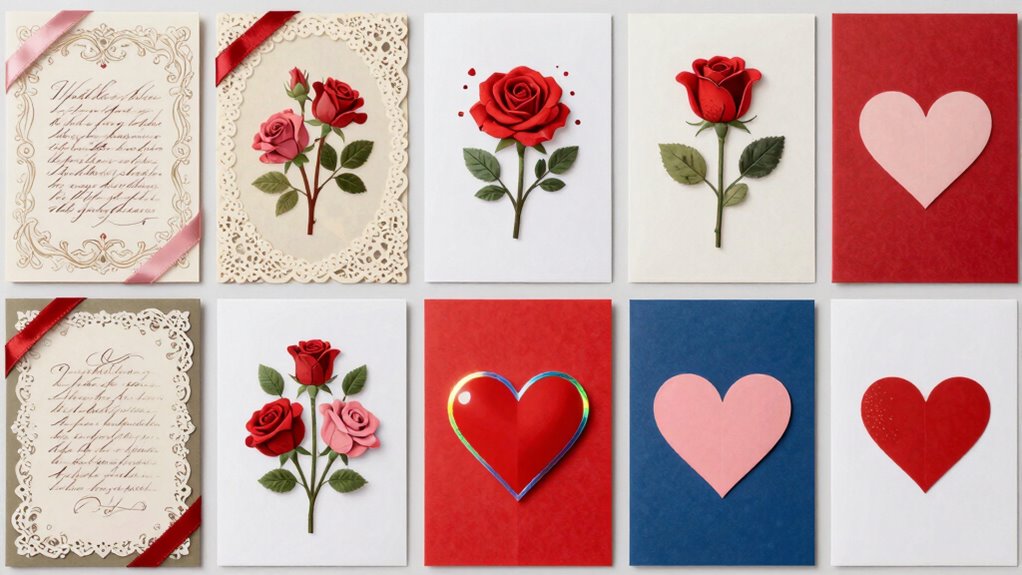

Over the last 200 years, Valentine cards have transformed from simple, handmade notes with basic illustrations into vibrant, intricate designs thanks to printing innovations like chromolithography and digital printing. Mass production made them more affordable, while new technologies added features like photos, animations, and pop-ups. Despite these changes, their core message remains the same: expressing love and affection. If you want to explore how these creative expressions evolved further, keep exploring this fascinating journey.

Get decor and gifts delivered free with Prime
- Fast, free delivery on millions of items
- Prime Video, Amazon Music and more included
- Member-only deals all year
Key Takeaways
- Early Valentine cards were handmade with simple motifs like Cupid and hearts, emphasizing heartfelt messages.
- Printing innovations like chromolithography enabled detailed, colorful, and mass-produced Valentine cards.
- Design evolved from basic illustrations to elaborate, ornate images with vibrant colors and expressive symbolism.
- Technological advances introduced features like photographs, pop-ups, and animations, enhancing visual appeal.
- Modern Valentine cards include digital formats, online messages, and personalized elements, maintaining the core theme of love.
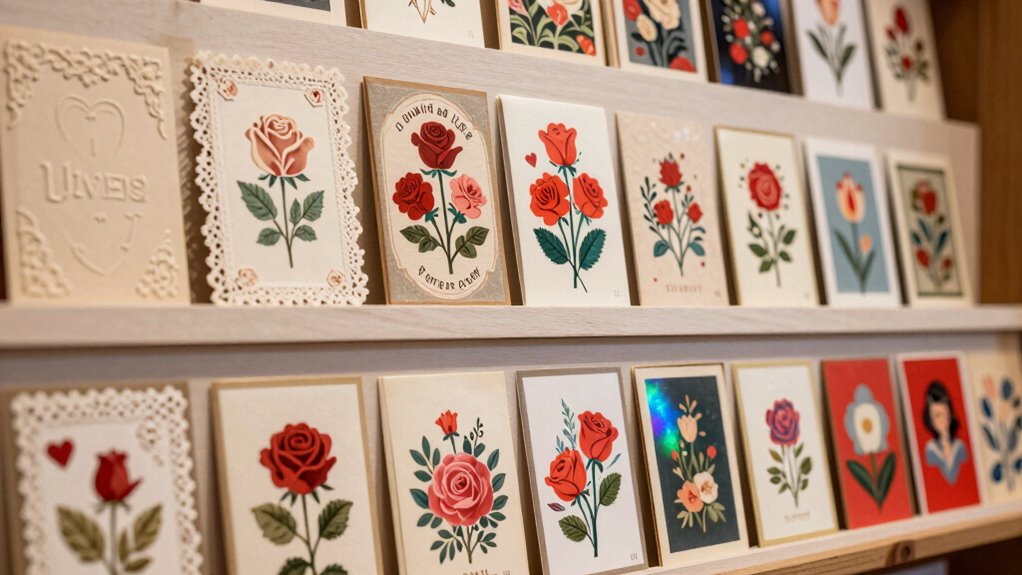
Have you ever wondered how Valentine cards became a beloved way to express love? It’s fascinating to see how they’ve evolved over the past 200 years, reflecting changes in society, technology, and cultural norms. Early Valentine cards, dating back to the 19th century, often featured intricate illustrations and heartfelt messages, but they were primarily handmade or produced through limited printing methods. As printing innovations developed, so did the complexity and accessibility of these cards. New printing techniques allowed for mass production, making Valentine cards more affordable and widely available. This shift meant that more people could participate in the tradition, exchanging cards that featured elaborate designs, romantic symbolism, and vibrant colors.
Valentine cards evolved from handmade designs to mass-produced symbols of love and romance.
Over time, the romantic symbolism embedded in Valentine cards became more expressive and diverse. Early cards often displayed Cupid, hearts, roses, and doves—symbols that have long represented love, passion, and purity. As printing innovations advanced, manufacturers could incorporate more detailed images, color gradients, and even photographic elements into the cards. This allowed for a richer visual language that communicated deeper emotional sentiments. The use of romantic symbolism became more personalized as well, with some cards including poems, personal messages, or illustrations tailored to specific relationships.
The design of Valentine cards also shifted from simple, hand-drawn motifs to more elaborate and ornate creations. The advent of chromolithography in the late 19th century revolutionized card printing by enabling the mass production of brightly colored, detailed images. This technological leap meant Valentine cards could now be both beautiful and affordable, encouraging widespread participation. As the 20th century progressed, printing innovations like offset printing and digital printing further expanded design possibilities. Cards could now feature photographs, pop-up elements, and even animated components, transforming the way love was visually expressed. Additionally, the ability to incorporate photographic elements allowed for even more personalized and realistic depictions of affection. Furthermore, advancements in printing technology also facilitated the inclusion of vibrant colors, making the cards more visually striking and emotionally impactful. These technological developments also contributed to the preservation and dissemination of artistic styles that reflected changing aesthetic preferences over time. Moreover, innovations in printing technology helped to mass produce these cards efficiently, making them accessible to a broader audience.
Throughout these changes, the core purpose remained the same: to convey affection, admiration, and romantic feelings. Yet, the ways in which these sentiments were expressed evolved along with the technology. Today, digital Valentine’s cards and online messages have supplemented traditional paper cards, but the essence of the gesture—using imagery, symbolism, and heartfelt words—remains unchanged. Over the last 200 years, Valentine cards have grown from simple tokens to complex expressions of love, driven by printing innovations and a desire to communicate romantic symbolism more vividly than ever before.
As an affiliate, we earn on qualifying purchases.
Frequently Asked Questions
How Did Valentine Cards Influence Modern Digital Greetings?
Valentine cards influenced modern digital greetings by paving the way for digital personalization and social media integration. You now easily customize messages, add photos, and share heartfelt sentiments instantly through online platforms. This evolution allows you to connect more personally and creatively, making your Valentine’s Day greetings more meaningful. Thanks to these advancements, expressing love has become faster, more interactive, and accessible, building on the tradition of thoughtful card-giving.
What Materials Were Used in the Earliest Valentine Cards?
Imagine holding an 18th-century Valentine, crafted with delicate handmade paper and layered with gold leaf. Back then, materials like parchment, vellum, and hand-pressed paper formed the foundation of these cards. Artists employed intricate techniques such as embossing and watercolor painting, showcasing historical craftsmanship. These early materials and artistic methods set the stage for the elaborate, heartfelt expressions we enjoy in modern cards today.
How Did Valentine Card Designs Reflect Social Changes?
You see, Valentine card designs mirror social changes by shifting from formal, romantic symbolism to more diverse, inclusive themes. As societal norms evolved, cards began to feature playful, humorous, or personalized messages, reflecting greater individualism. This progression allows you to appreciate how the imagery and language on Valentine cards adapt to cultural values, showcasing an expanding view of love beyond traditional romantic symbolism and embracing broader expressions of affection and connection.
Were Valentine Cards Popular in All Countries Equally?
Imagine a world where Valentine cards are as common in Tokyo as in New York—unfortunately, that’s not the reality. You’ll find that Valentine card popularity varies due to cultural variations and regional traditions. Some countries embrace handwritten notes, while others prefer modern digital expressions. So, you won’t see equal popularity everywhere, as local customs and traditions greatly influence how and when people exchange these heartfelt tokens.
How Do Valentine Card Customs Differ Across Cultures?
You’ll notice that Valentine card customs differ across cultures due to unique regional traditions and cultural symbolism. In some countries, like Japan, women give cards to men, emphasizing gratitude, while in others, like the United States, exchanging cards is more about romantic love. These customs reflect local values, symbolism, and traditions, shaping how people celebrate and show affection during Valentine’s Day around the world.
Conclusion
Just like a river flowing and shaping the land over time, Valentine cards have evolved, carving out new traditions and expressions of love. From handwritten notes to elaborate designs, these cards reflect how our way of saying “I love you” has deepened and broadened. As you send your next card, remember you’re part of a centuries-long current, carrying the timeless message of affection forward. Keep the love flowing—because it’s a wave that never truly ends.
Halloween Picks
halloween
As an affiliate, we earn on qualifying purchases.