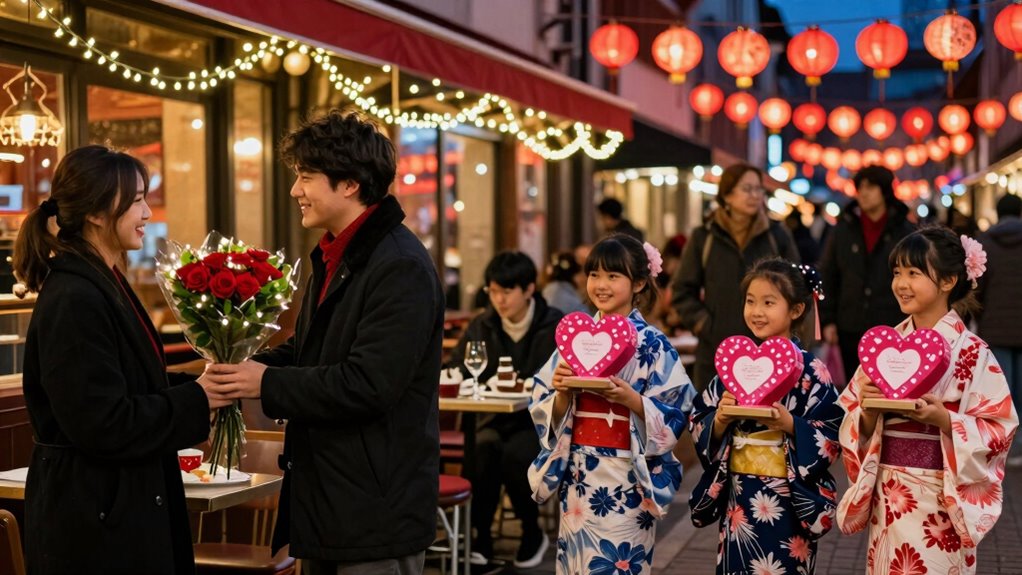

In Japan, women give chocolates to partners, friends, and colleagues, with men reciprocating on White Day. South Korea follows a similar pattern with women gifting men on February 14th and singles celebrating Black Day in April. European countries like France and Italy emphasize poetic gestures, dinners, and small gifts. In the U.S., people enjoy cards, flowers, and date nights, making the holiday more personal and inclusive. If you want to discover more unique customs from around the world, keep exploring.

Get decor and gifts delivered free with Prime
- Fast, free delivery on millions of items
- Prime Video, Amazon Music and more included
- Member-only deals all year
Key Takeaways
- Japan and South Korea have unique customs involving obligatory chocolates and reciprocal gift-giving, with additional celebrations like Black Day for singles.
- European countries like France and Italy emphasize poetic gestures, handwritten notes, dinners, and small gifts to express love.
- The United States focuses on cards, flowers, chocolates, and inclusive celebrations involving friends and family, reflecting modern commercialization.
- Cultural traditions vary widely, with each country blending traditional rituals and modern adaptations to celebrate romantic love.
- Celebrations often include specific foods, gift exchanges, and symbolic gestures rooted in local history and cultural values.
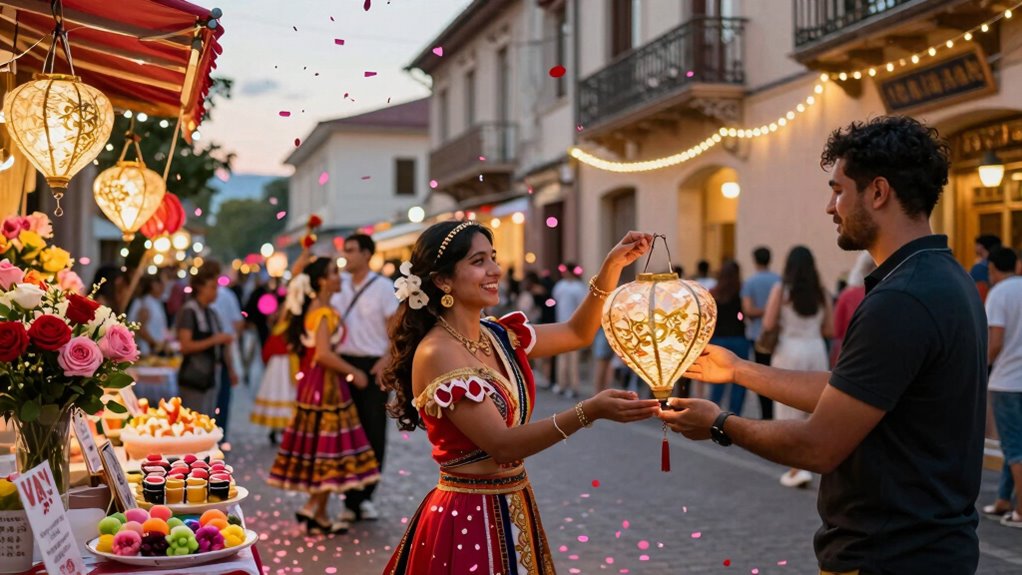
Valentine’s Day is celebrated around the world, but each country adds its own unique twist to the holiday. You might think of it as a simple day for exchanging flowers and chocolates, but in many places, it’s a vibrant celebration rooted in cultural traditions and romantic customs that reflect local history and values. For example, in Japan, women take the lead by giving chocolates not just to their partners but also to friends and colleagues, following a custom called “giri-choco,” which means obligation chocolate. A month later, on White Day, men reciprocate with gifts, turning the day into a mutual exchange of affection. This tradition shows how cultural nuances shape romantic customs, emphasizing social bonds alongside romantic love.
Valentine’s Day features unique customs worldwide, blending cultural traditions with romantic gestures that reflect local history and values.
In contrast, in South Korea, Valentine’s Day is just one part of a series of romantic celebrations. Women give chocolates to men on February 14th, but a few weeks later, on March 14th—called White Day—men return the favor with gifts. Additionally, in April, there’s Black Day, where singles gather to eat black noodles, symbolizing their singleness. These customs highlight how South Korean culture blends romantic gestures with social bonding, creating a multi-layered approach to love. You’ll notice that these celebrations often involve specific foods and gift-giving traditions that reinforce the importance of relationships in society. The cultural diversity of these customs demonstrates how romantic practices can vary widely across different nations. Recognizing these romantic customs can deepen your understanding of each culture’s unique approach to love and relationships.
Moving to Europe, countries like France and Italy embrace romantic customs deeply rooted in their history. In France, Valentine’s Day is all about expressing love through poetic gestures and handwritten notes, reflecting their long-standing appreciation for romance and art. Italy, meanwhile, often celebrates with special dinners and exchanging small gifts like jewelry or flowers, emphasizing the elegance and passion that define their cultural traditions. These customs create an intimate atmosphere, where love is celebrated not just with gifts, but with heartfelt expressions that mirror the country’s romantic legacy. Such traditions often include cultural symbolism, which further enhances the emotional significance of the holiday.
In the United States, Valentine’s Day has become a commercial celebration, with a focus on expressing affection through cards, flowers, and chocolates. While romantic customs like date nights and surprise gestures are common, the holiday has broadened to include friends and family, making it more inclusive. The holiday’s commercialization demonstrates how modern societies adapt traditional celebrations to contemporary values, encouraging widespread participation. The emphasis on personal expression and spontaneous acts of love reflects American values of individualism and emotional openness. In every country, whether it’s through traditional rituals or modern practices, Valentine’s Day offers you a chance to connect and celebrate love in ways that are uniquely shaped by local cultural traditions.
As an affiliate, we earn on qualifying purchases.
Frequently Asked Questions
When Did Valentine’s Day Originate Worldwide?
Valentine’s Day originated around the 3rd or 4th century AD, rooted in the historical origins of Roman and Christian traditions. You’re influenced by cultural influences that transformed it from a feast honoring Saint Valentine into a celebration of love worldwide. Over centuries, it evolved through various customs, blending ancient Roman rituals with Christian martyrdom stories, shaping how people today express affection and romance across different cultures.
Are There Any Unique Valentine’s Day Traditions in Specific Countries?
Valentine’s Day offers a tapestry of cultural rituals and local customs that make each country’s celebration unique. In Japan, women give chocolates to men, while in South Korea, singles celebrate with a “Black Day.” In Finland, friends exchange heartfelt cards, transforming the day into a celebration of friendship. These traditions are like colorful threads weaving a vibrant cultural quilt, showing how love is celebrated in wonderfully diverse ways across the globe.
How Do Children Participate in Valentine’s Day Celebrations Globally?
On Valentine’s Day, children participate by exchanging children’s cards at school, often decorated with hearts and cute messages. Schools host parties where kids share treats and enjoy themed activities, fostering friendship and kindness. In many countries, children’s participation is central, making the celebration more about community and affection. These traditions help kids learn about love and friendship, creating joyful memories that last well beyond February 14th.
What Are the Most Popular Valentine’s Day Gifts Internationally?
You’ll find that popular Valentine’s Day gifts vary worldwide, but common choices include chocolates, flowers, and jewelry. In many cultures, gift-giving customs emphasize romantic gestures, often tied to cultural symbols like roses in Western countries or red envelopes in China. You might also see personalized tokens or traditional items reflecting local customs, making the celebration uniquely meaningful across different nations.
How Has Social Media Influenced Valentine’s Day Celebrations Worldwide?
You see vibrant photos of roses and heartfelt messages flooding your feed, all thanks to social media’s influence on Valentine’s Day. Digital dating has made connecting easier, while social campaigns spark global love stories. You’re inspired by shared moments, from virtual date nights to online gift exchanges. Social media transforms your celebration into a worldwide event, turning personal feelings into a collective wave of affection that crosses borders effortlessly.
Conclusion
No matter where you are, Valentine’s Day offers a unique way to celebrate love. Did you know that Japan and South Korea exchange more than 100 million chocolates on this day? Whether it’s exchanging gifts, special dinners, or unique traditions, each country adds its own flavor to the celebration. So, embrace the diversity and enjoy spreading love in your own special way—you might even discover new traditions to cherish!
Fall Picks
fall essentials
As an affiliate, we earn on qualifying purchases.