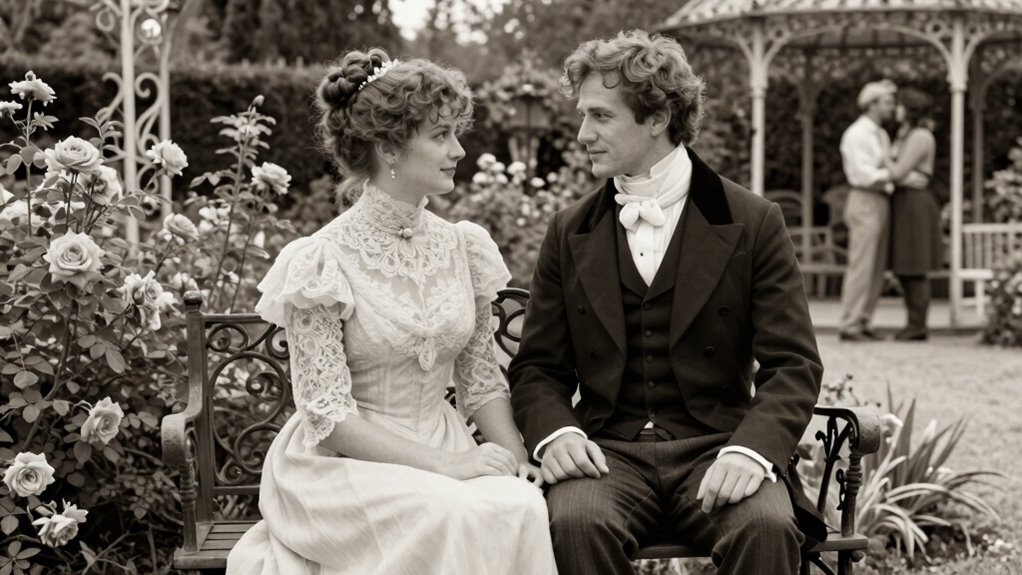

Since the 19th century, romantic etiquette has shifted from strict, formal rituals to a more relaxed, authentic style. You no longer need chaperones or monitored letters; instead, spontaneous and personal interactions are encouraged. Men no longer solely lead, and women are freer to express their feelings. Society now values genuine connection over adherence to traditions, allowing more freedom in how you experience romance. Keep exploring to discover how these changes continue to shape modern love.

Get decor and gifts delivered free with Prime
- Fast, free delivery on millions of items
- Prime Video, Amazon Music and more included
- Member-only deals all year
Key Takeaways
- Formal courtship rituals and chaperoned visits have been replaced by more spontaneous and private romantic interactions.
- Men no longer solely initiate romantic advances; women now actively participate in choosing partners.
- Communication shifted from monitored letters to instant messaging and personal conversations, fostering immediacy.
- Emphasis on propriety and social reputation has given way to authentic emotional expression.
- Cultural shifts have led to greater acceptance of diverse relationships and less rigid adherence to traditional norms.
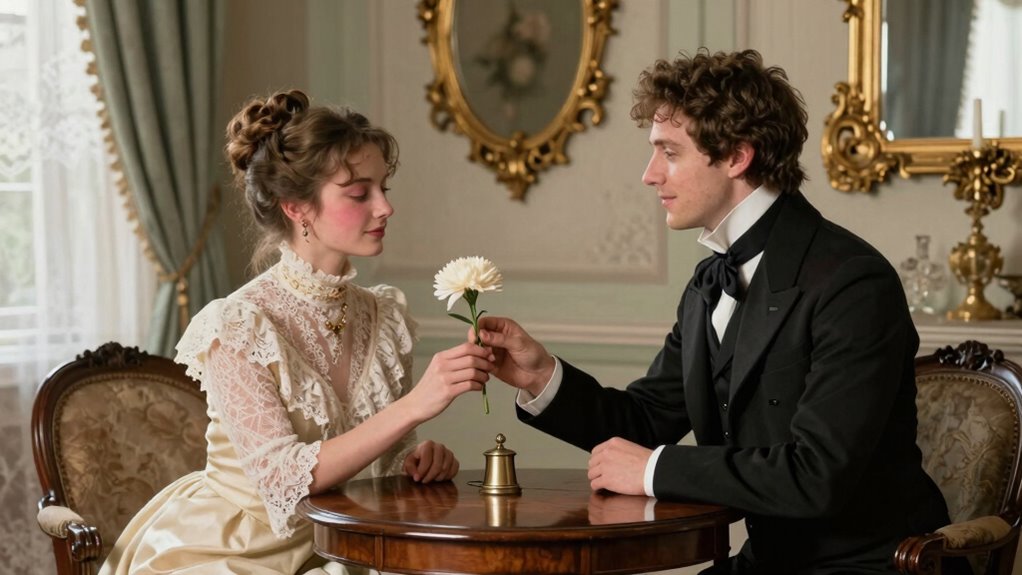
Since the 19th century, romantic etiquette has undergone significant transformations, reflecting broader social changes and shifting attitudes toward gender roles and personal autonomy. Back then, social customs dictated strict behaviors, and courtship rituals were formal and often rigid. You might have found yourself following a clear set of rules—waiting for a suitor to make the first move, exchanging carefully monitored letters, or receiving chaperoned visits. These customs emphasized propriety and modesty, with men taking the lead in initiating relationships and women expected to remain reserved. Courtship was a slow process, often involving family approval and social reputation, and personal choice played a minimal role. The entire process was about adhering to societal expectations rather than expressing genuine feelings. Over time, these social customs gradually relaxed, allowing for more personal freedom in romantic interactions. This evolution was influenced by broader cultural shifts and increased emphasis on individual autonomy, which reshaped how romance was approached and experienced. As communication methods evolved with technological advancements, the pace and nature of romantic interactions also transformed, further diminishing the influence of traditional courtship rituals. These changes have opened the door for a more relaxed and authentic approach to romance today.
As an affiliate, we earn on qualifying purchases.
Frequently Asked Questions
How Did Communication Methods Influence Romantic Etiquette Shifts?
You see, digital messaging and social media revolutionized romantic etiquette by making communication instant and more casual. You can now connect anytime, which shifts expectations around dating and expressing feelings. No longer do you wait days for a letter; instead, quick texts and social media interactions keep romance alive in real time. This immediacy fosters openness but also demands more constant attentiveness, changing how you approach romantic gestures and boundaries.
What Role Did Societal Class Play in 19th-Century Romance Norms?
Social class shaped 19th-century courtship rituals profoundly, dictating who could pursue whom and how. Higher classes held strict standards, emphasizing propriety, privacy, and formalities, while lower classes often embraced more relaxed, community-based courtship. You, as part of society, experienced these class distinctions firsthand, where social standing defined acceptable behaviors, romantic interactions, and even the timing and manner of expressing love—making class a cornerstone of romantic customs.
How Did Gender Roles Affect Dating Practices Historically?
Gender roles historically shaped dating practices through strict courtship rituals and expectations. As a man, you were expected to initiate contact and demonstrate your suitability, while women adhered to modesty and passive roles. These gender expectations limited genuine connection, emphasizing propriety over personal preference. Over time, society shifted towards more egalitarian approaches, allowing both genders to participate equally in courtship and express their true selves.
Were There Regional Differences in Romantic Etiquette During the 19TH Century?
You’ll find that regional customs and cultural variations heavily influenced romantic etiquette in the 19th century. While some areas emphasized formal courtship rituals, others favored more relaxed practices. For example, rural communities often adhered to traditional rules, whereas urban centers embraced more modern, diverse approaches. These regional differences showcase how local customs shaped dating behaviors, making romantic etiquette a reflection of broader cultural norms across various regions.
How Did Technological Advances Impact Modern Romantic Etiquette?
Technological advances, like digital communication and social media, have profoundly reshaped modern romantic etiquette. You now communicate instantly, often through texts, emails, or social media messages, which can be more casual but also more immediate. These tools influence how you express interest, flirt, and maintain relationships, making dating more accessible yet sometimes more complex. Social media also introduces new expectations around transparency, boundaries, and public displays of affection.
Conclusion
Today, you’re free to express your love openly, unlike the secretive courtships of the 19th century. Modern romance invites authenticity, vulnerability, and even a little PDA—think of it as your personal love playlist that’s more “Love on Top” than a Victorian love letter. As you navigate this new era, remember that the true essence of romantic etiquette is about connection, not protocol. So, go ahead—be genuine, be bold, and let your heart lead the way.
Evergreen bestsellers Picks
bestsellers
As an affiliate, we earn on qualifying purchases.