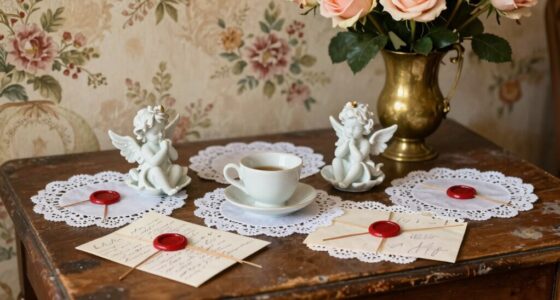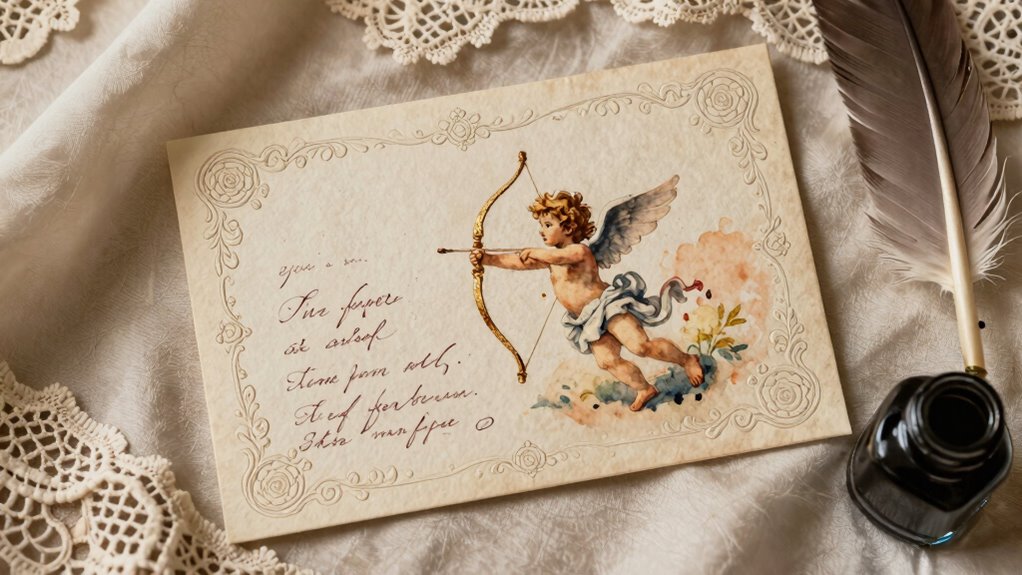

Victorian valentines teach you the value of thoughtful symbols and respectful communication in romance today. They show that meaningful gestures, like heartfelt notes and subtle emojis, carry deep emotional weight. Taking time to choose your words carefully and respecting boundaries builds genuine connection. By embracing the timeless principles of sincerity and subtlety, you can foster more meaningful relationships. If you’re curious about how these old-fashioned practices can enrich your love life, there’s more to discover.

Get decor and gifts delivered free with Prime
- Fast, free delivery on millions of items
- Prime Video, Amazon Music and more included
- Member-only deals all year
Key Takeaways
- Thoughtful, symbolic gestures convey deep emotion more meaningfully than fleeting words.
- Respectful, polite communication fosters genuine connection and enduring affection.
- Taking time to craft personalized messages shows sincerity and care.
- Symbols like hearts and roses can express feelings subtly yet effectively.
- Reflecting on social norms encourages respectful, meaningful expressions of love today.

Have you ever wondered how the charming traditions of Victorian valentines compare to the ways we express love today? Back then, sending a valentine wasn’t just about a sweet note or a quick text; it was a carefully crafted gesture filled with meaning, rooted in historical symbolism and social etiquette. Victorian valentines often featured symbols like hearts, roses, or doves—images that conveyed specific feelings and intentions. For example, the heart represented deep affection, while a dove symbolized peace and devotion. These symbols weren’t random; they were part of a shared language that helped people communicate their feelings subtly yet profoundly, especially in an era when open expressions of emotion could be considered inappropriate or too forward.
Social etiquette played a pivotal role in how valentines were exchanged. Sending a card was a delicate act, often governed by strict norms. You couldn’t simply give your feelings openly; instead, you had to navigate a web of polite restraint and discreet communication. Carefully selected words, respectful tone, and proper presentation were essential to avoid overstepping boundaries. Sometimes, the sender would include a poetic verse or a carefully penned message that hinted at deeper feelings without outright confessing love. This careful dance of social propriety meant that valentines became a way to express affection while maintaining social decorum—something that’s less common in today’s more casual, direct approach to love notes and messages. Understanding the social norms behind these exchanges can help us appreciate the subtlety involved in Victorian romance.
Despite these differences, there’s a lot we can learn from Victorian valentines about the art of meaningful communication. They remind us to be intentional with our gestures and words, to think about what symbols or messages truly convey our feelings. Modern romance often favors quick texts or social media posts, which can sometimes lack the depth or thoughtfulness of a handwritten card. Victorian valentines teach us that love isn’t just about saying “I like you” but about sharing symbols, paying attention to social context, and expressing genuine emotion with care and respect. Understanding the symbolism behind these gestures can deepen our appreciation for how love was communicated with nuance and subtlety.
In today’s world of instant communication, it’s easy to forget the power of symbolism and etiquette in expressing love. The Victorian approach encourages us to slow down, choose our words carefully, and consider what our gestures truly mean. Whether through a heartfelt letter, a meaningful gift, or a simple act of kindness, the lessons from Victorian valentines remind us that love’s most enduring expressions are rooted in thoughtfulness, respect, and genuine connection. Additionally, understanding the importance of social etiquette can help us foster more meaningful and respectful relationships in our modern interactions. By embracing these timeless principles, we can bring a deeper level of sincerity and intention into our expressions of love today.
Victorian style romantic greeting cards
As an affiliate, we earn on qualifying purchases.
As an affiliate, we earn on qualifying purchases.
Frequently Asked Questions
How Did Victorian Valentines Influence Modern Greeting Card Designs?
Victorian Valentines heavily influenced modern greeting card designs through their use of historical symbolism and artistic motifs. You’ll notice how today’s cards incorporate intricate illustrations, romantic symbols like hearts and roses, and poetic language rooted in Victorian traditions. These elements convey emotion and sentimentality, making modern cards more personal. By adopting Victorian aesthetic details and symbolism, contemporary greeting cards continue to celebrate love with elegance and meaningful imagery.
Were Victorian Valentines Typically Anonymous or Signed?
Like secret messages in a coded language, Victorian Valentines were often anonymous to preserve romantic secrecy, allowing feelings to flourish without shame. Hidden symbols, from delicate lace to symbolic flowers, conveyed emotions subtly. You’d send a card, trusting only the recipient to decode its meaning. This tradition of romantic secrecy and hidden symbols reminds us that love’s most tender moments often thrive in mystery, not in plain sight.
What Materials Were Commonly Used for Victorian Valentines?
Victorian valentines were commonly made from handmade paper, giving them a unique and personal touch. You’ll find that embellished illustrations, often intricate and detailed, decorated many of these cards, making them visually stunning. These materials were chosen for their elegance and ability to showcase craftsmanship. When creating or appreciating Victorian valentines today, understanding these materials helps you see the effort and artistry that went into expressing romantic feelings in that era.
How Did Social Class Affect Valentine Traditions in Victorian Times?
You see, social class deeply influenced Victorian Valentine traditions. Higher classes flaunted elaborate, ornate cards with intricate designs, showcasing wealth and status. Meanwhile, lower classes often exchanged simpler valentines, reflecting their social hierarchy and limited resources. This class distinction affected not just the materials used but also the messages conveyed, emphasizing the importance of social standing. Today, understanding this history helps you appreciate how class distinctions shape romantic gestures and social customs.
Are Any Victorian Valentine Customs Still Practiced Today?
Victorian Valentine customs still bloom like timeless roses. You might exchange handwritten notes or intricate cards, echoing historical symbolism of love and devotion. Romantic expressions today often mirror Victorian ideals—thoughtful messages, personal tokens, and heartfelt gestures. These traditions, like a gentle thread woven through time, remind you that genuine affection isn’t about grand gestures but the sincerity behind your words and actions, preserving the essence of Victorian courtship in modern romance.
Conclusion
By exploring Victorian Valentines, you realize that the essence of romance hasn’t changed—it’s still about sincere gestures and heartfelt expressions. The intricate symbols and poetic messages of the past remind you that love is an art, not just a fleeting feeling. Embracing these timeless traditions can elevate your relationships to legendary heights, turning everyday moments into epic tales of devotion. Ultimately, understanding Victorian Valentines might just make your love story the greatest of all time.
Halloween Picks
halloween
As an affiliate, we earn on qualifying purchases.