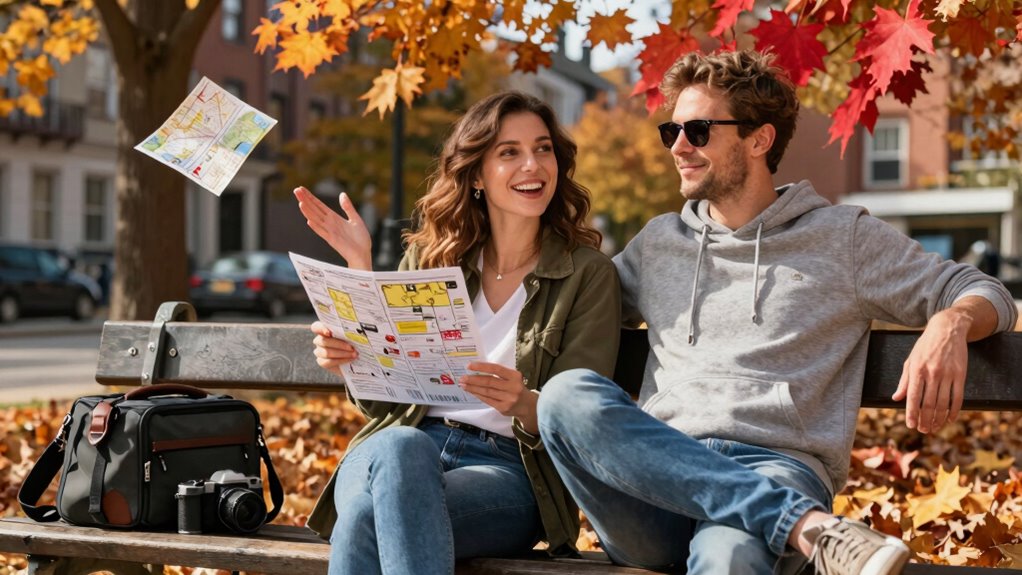

When traveling as a couple with differing planning styles, start by openly discussing your expectations and creating a shared framework. Encourage joint planning for core activities while leaving room for spontaneous adventures within agreed boundaries. Share responsibilities like packing and deciding on major activities to reduce stress. Stay flexible, maintain open communication, and respect each other’s preferences. To find out more ways to create harmony during your trip, keep exploring tips tailored for your unique travel duo.

Get decor and gifts delivered free with Prime
- Fast, free delivery on millions of items
- Prime Video, Amazon Music and more included
- Member-only deals all year
Key Takeaways
- Establish shared goals and expectations through open, honest conversations before the trip.
- Designate planning roles to the detail-oriented partner and leave room for spontaneous activities.
- Use collaborative tools to create flexible itineraries that accommodate both preferences.
- Set clear boundaries for spontaneous decisions to ensure comfort and reduce stress.
- Practice patience and appreciation for each other’s travel styles to foster a positive experience.

Traveling as a couple can be a rewarding experience, but it can also test your compatibility—especially when one of you loves planning every detail while the other prefers to go with the flow. To make the trip enjoyable for both of you, it helps to strike a balance between structure and spontaneity. Start by discussing your expectations openly. If one of you enjoys packing strategies that involve detailed lists, packing cubes, and careful organization, encourage that person to take the lead, but invite the other to contribute ideas on what essentials to bring and what can be left out. This way, the planning stage becomes a collaborative effort, reducing stress and ensuring both of your needs are considered.
Balance planning and spontaneity by discussing expectations and sharing responsibilities to ensure a stress-free, enjoyable trip together.
Budget planning is another critical aspect that can make or break your trip. The person who loves to plan often enjoys crunching numbers and setting a clear budget, which is beneficial in avoiding overspending. Agree on a total budget early on, and break it down into categories like accommodation, food, activities, and emergency funds. If one of you prefers to be more flexible with spending, try to incorporate some buffer in your budget to accommodate spontaneous decisions, like an unexpected sightseeing tour or a special dinner. This approach preserves the thrill of spontaneity without risking financial strain. Additionally, using tech tools can streamline your budgeting process and keep both partners informed about expenses throughout the trip. Incorporating biodiversity-conscious choices can also enhance your travel experience by supporting sustainable tourism practices. Being mindful of environmental impact can add an extra layer of meaning to your journey and contribute positively to the destinations you visit. Furthermore, discussing your preferred methods for decision-making can help prevent misunderstandings and ensure both partners feel involved in each choice.
To foster a positive experience, it’s also helpful to set clear expectations about each other’s comfort levels with adventure and risk, so you can manage spontaneous activities accordingly. When it comes to packing strategies, respect each other’s habits and preferences. If one of you tends to overpack, suggest packing versatile clothing that can be mixed and matched, reducing the number of items needed. Conversely, if the other prefers to pack minimal, encourage efficient choices that still cover all your activities. Share responsibilities by dividing packing tasks, so the planner handles the checklist while the other manages the actual packing. This division minimizes conflicts and ensures everything gets covered without the last-minute scramble.
Throughout your trip, maintain open communication. The person who loves planning should remain flexible enough to adapt if the spontaneous traveler changes plans on a whim. Conversely, the more spontaneous partner should appreciate the value of some structure to keep things running smoothly. By respecting each other’s strengths and preferences, you create a journey where both of you feel involved and valued. Remember, successful travel as a couple hinges on teamwork—balancing detailed planning with the joy of discovery and surprise, all while managing your budget effectively. This blend of organization and flexibility will help you enjoy your trip without unnecessary stress or frustration.
As an affiliate, we earn on qualifying purchases.
Frequently Asked Questions
How Can I Compromise Without Feeling Overwhelmed?
You can compromise by balancing spontaneity with planning, so neither of you feels overwhelmed. Set boundaries around how much to plan versus leaving room for surprises. Communicate openly about your comfort levels and preferences, ensuring both voices are heard. This way, you create a flexible itinerary that satisfies both your need for structure and your partner’s desire for spontaneity, reducing stress and making your trip enjoyable together.
What Tools Help With Spontaneous Travel Planning?
You can use spontaneity strategies like travel apps and last-minute deal websites to help plan on the fly. Keep flexible itineraries that allow for changes and surprises, making spontaneous decisions easier and more enjoyable. Packing light and having essential information ready also helps. These tools and strategies empower you to embrace spontaneity without stress, making your trip fun and adaptable for both of you.
How Do We Handle Disagreements Over Itineraries?
When disagreements over itineraries arise, you should prioritize unplanned adventures and surprise destinations that excite both of you. Communicate openly about what each of you wants, and find common ground by blending planned activities with spontaneous detours. Being flexible helps turn conflicts into shared experiences, making your trip more memorable. Remember, embracing surprises fosters connection and keeps the journey fun, even when opinions differ.
Can Travel Apps Accommodate Both Planning Styles?
Imagine you’re using a travel app that offers both structured itineraries and flexible planning features. These apps accommodate both planning styles by allowing you to customize your experience—some sections with detailed plans, others with open options. Travel app features like collaborative editing and adjustable schedules give you planning flexibility, so one person can enjoy spontaneous exploration while the other sticks to a plan. This way, both preferences are seamlessly integrated.
How to Build Trust in Travel Planning?
To build trust in travel planning, focus on open communication strategies. Share your preferences honestly and listen actively to your partner’s ideas. Agree on shared goals and respect each other’s comfort zones. Regularly check in during the planning process to guarantee both feel involved and valued. By demonstrating reliability and understanding, you strengthen trust, making the trip more enjoyable and stress-free for both of you.
Conclusion
By finding a balance between planning and spontaneity, you guarantee both of you enjoy the trip. Remember, even if one loves detailed itineraries, leaving room for surprise can add excitement. Imagine strolling through a hidden alley or discovering a cozy cafe unexpectedly—that’s the magic of blending both styles. So, relax and embrace the journey together, knowing that your shared adventures will create memories far richer than any perfectly curated plan.
Fall Picks
fall essentials
As an affiliate, we earn on qualifying purchases.