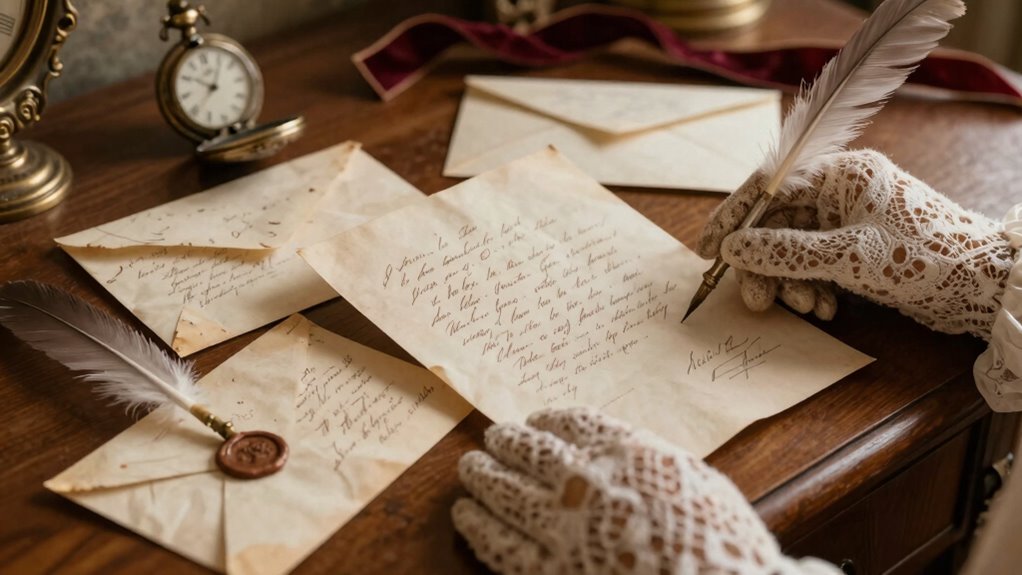

In historical romances, love letters serve as essential bridges between characters, offering a personal glimpse into their deepest emotions and secrets. You see, these handwritten notes reflect vulnerability, hope, and rebellion against societal constraints like class or family expectations. They add tension through secrecy and keep love alive in difficult times. Their enduring power lies in capturing love’s raw essence without modern tools. If you want to explore the stories behind these timeless expressions, there’s more to discover.
Key Takeaways
- Love letters in historical romance reveal deep emotional connections and vulnerabilities that enhance storytelling authenticity.
- They serve as secret communication tools, especially in forbidden romances constrained by societal norms.
- The epistolary style allows characters’ feelings, fears, and hopes to be expressed with intimacy and nuance.
- Handwritten letters with personal touches add realism, trust, and emotional depth to the narrative.
- These letters symbolize love’s enduring power, acting as treasured keepsakes of hope and devotion across generations.
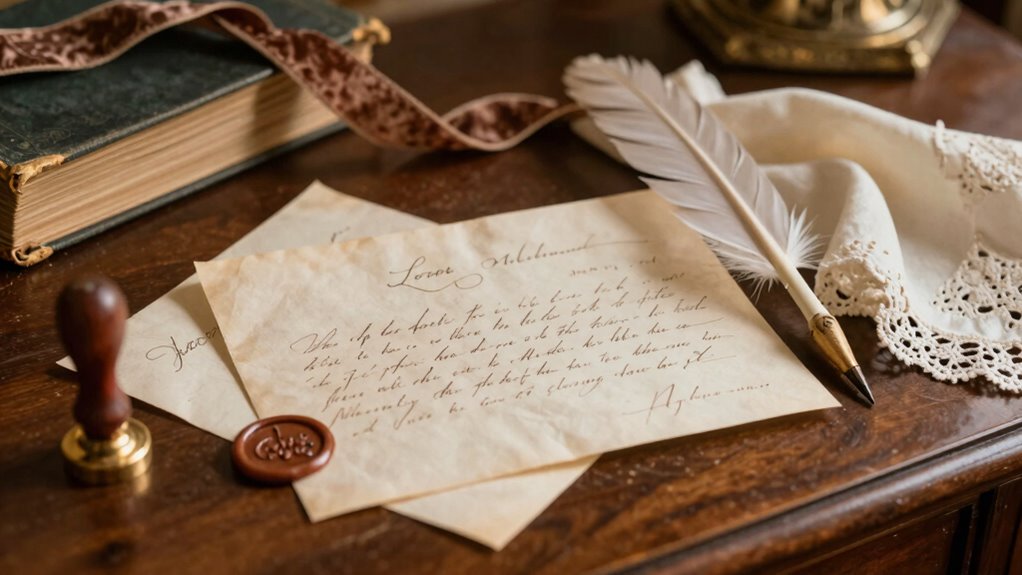
Love letters have long been a mesmerizing element of historical romance, serving as intimate glimpses into the hearts of characters separated by distance, class, or circumstance. These letters often capture raw emotion, vulnerability, and longing, making them a powerful storytelling device. When you immerse yourself in stories set in the past, you quickly realize how essential the epistolary style is to conveying the depth of a character’s feelings. Through carefully penned words, lovers reveal their innermost thoughts, often risking everything to express their desire or despair. This format creates a sense of immediacy and intimacy, making you feel as if you’re peering directly into their private world.
In many historical romances, love letters are more than just exchanges of affection; they become a crucial link between characters who face societal constraints and personal obstacles. For example, a forbidden romance adds an extra layer of tension and excitement to these stories. You see lovers who must hide their feelings due to class differences, family expectations, or social norms—restrictions that make their correspondence all the more forbidden and alluring. The act of writing and receiving these letters becomes a rebellion against the constraints of their world. It’s a secret language that sustains their hope and passion, even when they can’t be together physically.
The epistolary style allows authors to explore these forbidden romances with nuance and depth. Each letter reveals not only the characters’ love but also their fears, doubts, and dreams. As you read, you become privy to their most intimate thoughts, experiencing their emotional highs and lows firsthand. This method makes the romance feel authentic and immediate, pulling you into a world where words have the power to bridge impossible gaps. The suspense of whether their love will be discovered or if their secret will remain safe keeps you turning pages. Additionally, the use of handwritten correspondence reflects the importance of bank identification details in ensuring secure and authentic exchanges, much like how love letters served as secure and trusted communication in their time. Moreover, the personal handwriting adds a layer of vulnerability and authenticity that printed messages cannot replicate. Handwritten letters also often included personal symbols or doodles, which added an extra layer of intimacy and personality.
Love letters in historical romance also serve as a reminder of the enduring power of communication. They show how, even in a time without instant messaging or social media, love could flourish through handwritten words. These letters become treasured keepsakes, symbols of hope and devotion. Whether they’re filled with poetic longing or heartfelt confessions, they underscore the timeless nature of love—especially when it must be hidden behind societal barriers. In this way, love letters and the epistolary style continue to enchant readers, illustrating that even in the face of forbidden romance, love’s voice can never truly be silenced.

48 Pieces Stationery Set with Envelopes (24 Kraft Paper Sheets + 12 Linen Texture Envelopes+12 Wax Seal Stickers), Stationery Letter Writing Paper Set for Love Letters and Party Invitations (Red)
- Package Contents: 24 kraft sheets, 12 linen envelopes, 12 wax seals
- Paper Size: 8.3 x 5.6 inches
- Envelope Size: 6 x 4 inches
As an affiliate, we earn on qualifying purchases.
As an affiliate, we earn on qualifying purchases.
Frequently Asked Questions
How Did Handwriting Styles Influence Love Letter Authenticity?
Handwriting styles, like calligraphy styles and ink variations, greatly influenced love letter authenticity because they revealed a person’s personality and skill. You can tell a lot from the way someone writes—whether their script is elegant or hurried—making the letter more genuine. Unique calligraphy styles and ink choices also helped establish trust and emotional connection, as they demonstrated effort and sincerity, making the love message feel truly personal and authentic.
Were Love Letters Ever Used as Legal Evidence in Historical Disputes?
Yes, love letters were sometimes used as legal evidence in historical disputes. You need to understand that their legal implications depended on their authenticity and the ability to verify the sender’s identity. Courts examined handwriting, language, and context to determine historical authenticity. If proven genuine, love letters could serve as essential evidence in inheritance cases, marriage disputes, or accusations of forgery, highlighting their significance beyond romantic intent.
What Materials Were Commonly Used to Write Love Letters?
You’d be amazed how love letters, in their time, were written on medieval parchment or with Victorian ink, materials as precious as the feelings they conveyed. These durable, finely crafted surfaces guaranteed that heartfelt words lasted centuries. The parchment’s resilience and the ink’s richness made each letter a treasured keepsake, fueling romances that could withstand the test of time, as if love itself was etched into history forever.
Did Societal Norms Affect the Content of Love Letters?
Societal norms definitely influenced the content of love letters. You’d find that cultural expressions reflected the era’s values, often emphasizing modesty or romantic idealism. Gender expectations dictated how openly you could express your feelings; women’s letters might be more reserved, while men’s could be more passionate. These norms shaped not only what you wrote but also how you conveyed love, ensuring your words aligned with societal standards.
How Did Secret Codes or Ciphers Feature in Romantic Correspondence?
Did you know that over 60% of romantic correspondence in history used secret codes? You’d use encrypted messages or ciphers to keep your love secret, especially when societal norms frowned on forbidden romances. These clandestine communication methods allowed lovers to share tender words without fear of discovery. You could hide your true feelings behind complex symbols, making each letter an exciting puzzle and a secure way to express your deepest emotions.
Conclusion
Imagine love letters as secret gardens, hidden away yet bursting with vibrant blooms of emotion. Each note you read or write is like tending these delicate flowers, nurturing hope and longing in silent whispers. Just as a garden flourishes with care, so does love thrive through these timeless words. Remember, in the grand labyrinth of history, love letters are the guiding stars—illuminating the path to connection, even across centuries.