TL;DR

Get decor and gifts delivered free — and shop member deals
- Fast, free delivery on millions of items
- Access to Prime Big Deal Days deals on October 6–7
- Prime Video, Amazon Music and more included
A Hunker report describes fiber cement siding as a lower-maintenance alternative to wood, citing resistance to moisture, rot and pests and durable factory finishes. It can cost about $7 to $18 per square foot in some areas, according to the report, and its long-term savings depend on local prices, installation and upkeep.
Fiber cement siding may lower long-term maintenance compared with wood siding, according to a Hunker report, but it typically costs more to buy and requires professional installation. The material is designed to resemble wood while resisting moisture, rot and pests; whether it costs less over time depends on local prices and the products selected.
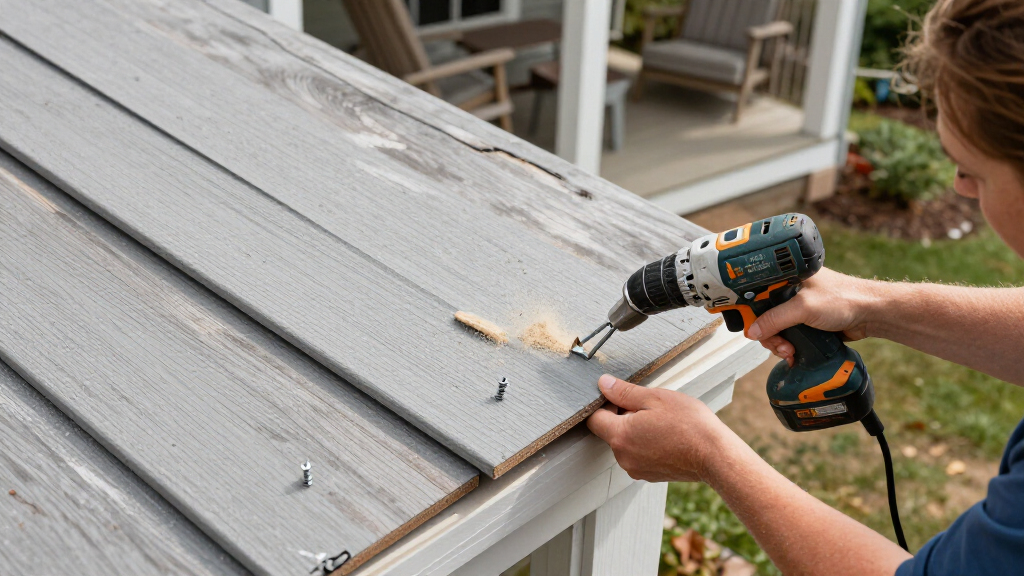
Fiber cement siding is made from a composite of Portland cement, sand and cellulose fibers. Hunker says it is available in styles including horizontal lap boards, vertical panels and shingles, allowing homeowners to approximate traditional clapboard or shingle designs. Options include pre-primed boards that can be painted and factory-finished panels sold in selected colors.
The report says factory-applied finishes are baked on and may last longer than standard paint. It notes that some manufacturers offer 15- or 25-year warranties against fading. Warranty terms differ by manufacturer and product, and a fading warranty does not necessarily cover every form of damage or eliminate future maintenance.
Hunker gives a price range of $7 to $18 per square foot in some areas, while cautioning that cost depends on region and product line. The report does not specify whether that figure includes labor, removal of existing siding, or other project expenses. Fiber cement is heavier and more brittle than wood, so Hunker recommends hiring a professional rather than installing it as a do-it-yourself project.
Upfront Price Versus Ongoing Upkeep
For homeowners comparing siding, the decision is not simply a matter of material price. Wood can require periodic repainting or restaining, while fiber cement may need less frequent finish work, according to Hunker. Those differences can affect spending over the life of the siding, particularly where labor and maintenance materials are costly.
But the source does not provide a direct lifecycle-cost comparison or a typical payback period. A homeowner cannot assume fiber cement will be cheaper in every case: initial material and installation costs, local climate, finish quality and the condition of existing walls all affect the total. Getting itemized local estimates for both options is a more reliable basis for comparison than treating the reported range as a universal price.
The material’s reported resistance to pests, moisture and fire may also matter to property owners weighing durability and risk. Hunker describes it as less flammable than wood, not fireproof. Product specifications and local building requirements should be checked before treating that characteristic as a substitute for other fire-safety measures.
As an affiliate, we earn on qualifying purchases.
How Fiber Cement Differs From Wood
Wood siding is often chosen for its natural appearance, but Hunker identifies several vulnerabilities: exposure to moisture can contribute to warping and rot, prolonged sun can fade stains, and pests such as termites may damage the material. Keeping wood in good condition can involve repeated painting or restaining, though the frequency and cost vary with the product, climate and maintenance practices.
Fiber cement is manufactured to offer a similar appearance using a cement-based composite rather than solid wood. Its surface can come pre-primed for later painting or with a factory-applied finish. Factory finishes and warranties vary, so buyers should review the specific manufacturer’s coverage and care instructions rather than assume all products perform alike.
The source presents fiber cement as a home-improvement option, not a newly announced product or policy change. Its central point is a practical comparison: wood may have a lower starting price in some cases, while a more durable finish could reduce upkeep. The report supplies no project-specific estimate, independent test results or full comparison of lifetime costs.
“Fiber cement siding is a composite of Portland cement, sand, and cellulose fibers.”
— Hunker report
Local Costs and Product Coverage
The report does not identify the regions behind its $7-to-$18-per-square-foot range, say whether those prices include labor, or compare fiber cement with a specific grade of wood siding. Actual estimates may vary based on product, home design, access, removal and installation requirements.
It is also unclear how quickly reduced maintenance might offset a higher initial price for a particular home. The source provides no modeled ownership period, maintenance schedule or savings calculation. Warranty lengths are examples rather than guarantees available on every product, and homeowners should check exclusions, required maintenance and transferability with manufacturers.
Compare Installed Project Estimates
Homeowners considering a replacement can request itemized quotes for both wood and fiber cement, including materials, labor, old-siding removal, trim and any preparation work. They should confirm that installers are experienced with fiber cement, which the report says is heavier and more brittle than wood, and review applicable local building requirements.
Before choosing a factory finish, buyers can compare its warranty and care instructions with the costs of painting or staining wood over the expected ownership period. The source identifies no upcoming product announcement or official decision; the next useful step is a project-specific comparison based on local pricing and the homeowner’s maintenance priorities.
Key Questions
Is fiber cement siding always cheaper than wood?
No. Hunker says it can have a higher upfront cost, with a reported range of $7 to $18 per square foot in some areas. Long-term savings depend on local prices and maintenance costs; the report does not establish that fiber cement is cheaper for every home.
How long do fiber cement siding finishes last?
The report says some manufacturers offer 15- or 25-year warranties against fading. Those are examples, not a universal lifespan or promise for every type of damage. Check the exact product warranty and care requirements.
Can fiber cement siding be installed as a DIY project?
Hunker advises hiring a professional because fiber cement is heavier and more brittle than wood. Installation methods and requirements depend on the product and local rules.
Does fiber cement siding look like wood?
It is designed to imitate wood and comes in styles such as lap boards, vertical panels and shingles. Buyers can choose pre-primed boards or factory-finished options, with styles and colors varying by manufacturer.
Source: rss
Halloween Picks
halloween
As an affiliate, we earn on qualifying purchases.