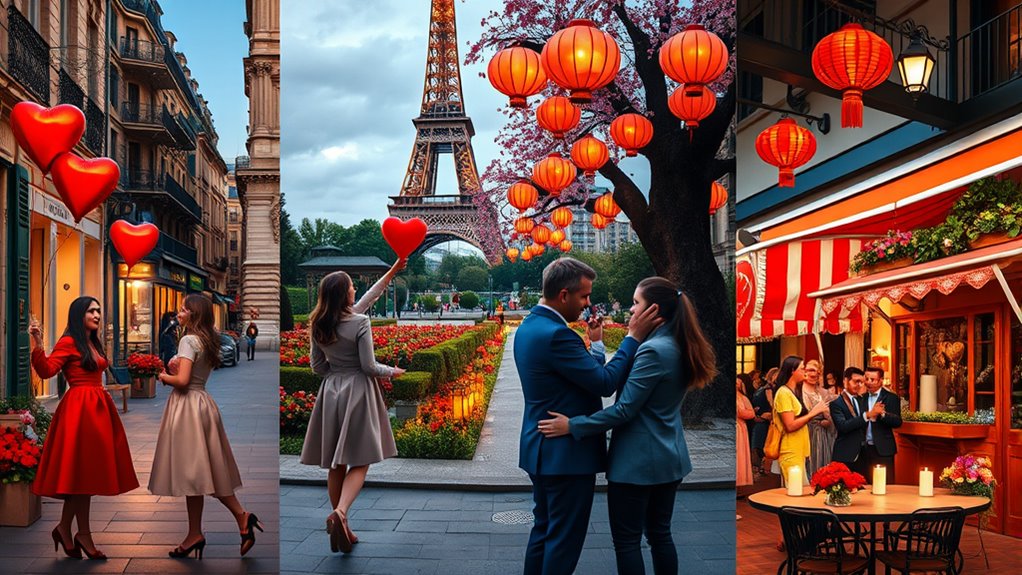
On Valentine’s Day, you’ll see a variety of celebrations worldwide, from heartfelt cards and romantic dinners in North America, to vibrant parades and community festivals in Latin America. Europeans often exchange flowers and gifts, while Asian cultures include special gift-giving customs like chocolates and poetic gestures. In Africa, traditional dances and rituals highlight cultural bonds, and in Oceania, outdoor festivals and native flowers are popular. To discover more about these diverse traditions, keep exploring the fascinating ways people celebrate love around the globe.
Key Takeaways
- Celebrations vary widely, from romantic dinners and gift exchanges in Western countries to vibrant parades and traditional rituals in Latin America and Africa.
- Gift-giving customs differ, with chocolates and flowers common in Europe and Asia, and handcrafted items or community events in other regions.
- Modern trends include social media campaigns, virtual dates, and digital gifts, enhancing global participation and cultural expression.
- Many regions incorporate unique symbols and practices, like lantern festivals in China or community dances in Africa, reflecting local heritage.
- The holiday’s origins stem from Roman and Christian traditions emphasizing love, sacrifice, and devotion, influencing diverse modern celebrations worldwide.
Valentine’s Day Celebrations in North America
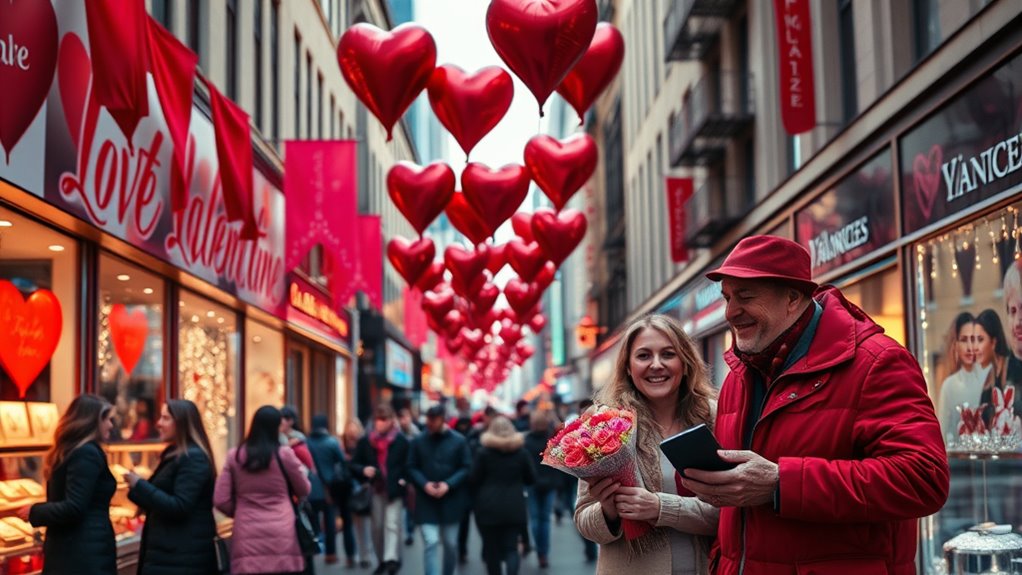
Valentine’s Day in North America is a lively celebration filled with romantic gestures and festive events. You might start your day by exchanging heartfelt cards or love notes, expressing your feelings creatively. Many people give flowers, especially red roses, as a symbol of love, often surprising their partners at work or home. Chocolates and small gifts are also popular, making the day feel special and personal. Romantic dinners at restaurants are common, where couples enjoy candlelight meals, and some even plan weekend getaways. Schools often host parties or craft activities for children to celebrate friendship and love. Overall, the day emphasizes expressing affection openly, making it a joyful occasion to celebrate love with friends, family, and partners alike. Additionally, some communities organize public events like parades and concerts to enhance the festive atmosphere. Incorporating diverse cultural traditions from around the world, such as unique celebrations, further enriches the global ways of honoring love on this special day. Recognizing the importance of positive thinking and emotional well-being can also add a meaningful touch to the celebrations. Moreover, many families and organizations participate in community activities, fostering a spirit of togetherness and kindness. Being aware of different weather forecasting methods can help plan outdoor activities during these festivities.
Unique Traditions in Latin America and the Caribbean
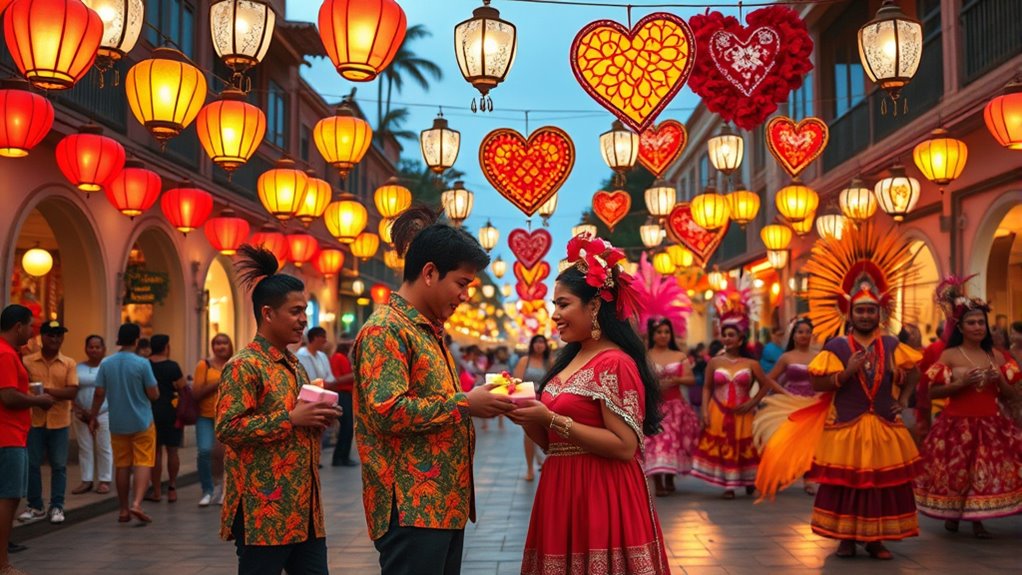
In Latin America and the Caribbean, Valentine’s Day is marked by vibrant, community-focused traditions that go beyond just romantic gestures. People often organize colorful parades, street parties, and public displays of affection that bring neighborhoods together. In some countries, like Colombia, locals exchange small gifts called “detalles” to show appreciation for friends and family. Meanwhile, in Puerto Rico, “Día del Amor y la Amistad” emphasizes friendship and love for everyone, not just couples. Here’s a closer look at some common customs:
| Tradition | Location | Description |
|---|---|---|
| Friendship tokens | Puerto Rico | Gift-giving among friends and family |
| Community parades | Colombia | Vibrant street celebrations |
| Love and friendship festivals | Mexico | Public events celebrating all types of love |
Additionally, many communities incorporate sustainable practices into their celebrations, reflecting growing awareness of environmental impact during festivities. These eco-friendly initiatives often include recycling efforts and the use of biodegradable decorations to minimize waste. Incorporating traditional music and dance also plays a significant role in fostering cultural pride and unity during these festivities. Furthermore, some regions incorporate cultural heritage into their celebrations, highlighting local customs and history. Celebrations often feature bike rides and parades, which promote community engagement and healthy activities during this special time.
Romantic Customs in European Countries

Across Europe, romantic customs on February 14th often focus on intimate gestures that highlight personal connection and tradition. You might exchange handwritten love notes, known as valentines, to express your feelings. In countries like France, couples celebrate by sharing chocolates, flowers, and romantic dinners at cozy cafes or fine restaurants. In Italy, it’s common to give red roses, symbolizing love, or enjoy a heartfelt night together. In the UK, many people exchange small gifts or plan special outings to mark the day. In Germany and other nations, couples might participate in traditional dances or attend romantic events. Additionally, some countries have residency requirements that influence how couples celebrate and plan their festivities. Understanding the offensive security measures can also help in appreciating how modern safety practices are incorporated into traditional celebrations. Incorporating indoor gardening options, like creative planters, can add a unique touch to romantic gift-giving and home decor. A variety of seasonal decorations are often used to enhance the festive atmosphere during Valentine’s Day. Incorporating rustic elements into the setting can further enhance the cozy and heartfelt atmosphere of the celebration. Regardless of the country, the emphasis remains on expressing affection through meaningful gestures that deepen your bond and honor the romantic spirit of Valentine’s Day.
Celebrations in Asian Cultures

Celebrations of love in Asian cultures often blend traditional customs with modern expressions of affection. In countries like Japan and South Korea, couples exchange gifts, such as chocolates and flowers, but with unique twists. For example, Japanese women give chocolates to men on Valentine’s Day, while men reciprocate a month later on White Day. In South Korea, couples celebrate “Black Day” by wearing black and eating noodles if they’re single. In India and China, love is often expressed through poetic gestures or family-approved arrangements, blending cultural values with personal feelings. While the traditions vary, the core idea remains: celebrating love’s importance. You might notice that these customs emphasize respect, symbolism, and heartfelt connections, reflecting each culture’s deep-rooted beliefs about romance and relationships. Additionally, the role of cultural values influences how romantic gestures are perceived and celebrated across different Asian societies. Furthermore, many of these celebrations are also intertwined with traditional festivals that honor love and harmony. Recognizing the creative practice behind these customs reveals how artistic expressions enhance the emotional depth of celebrations.
African Festivities and Local Practices
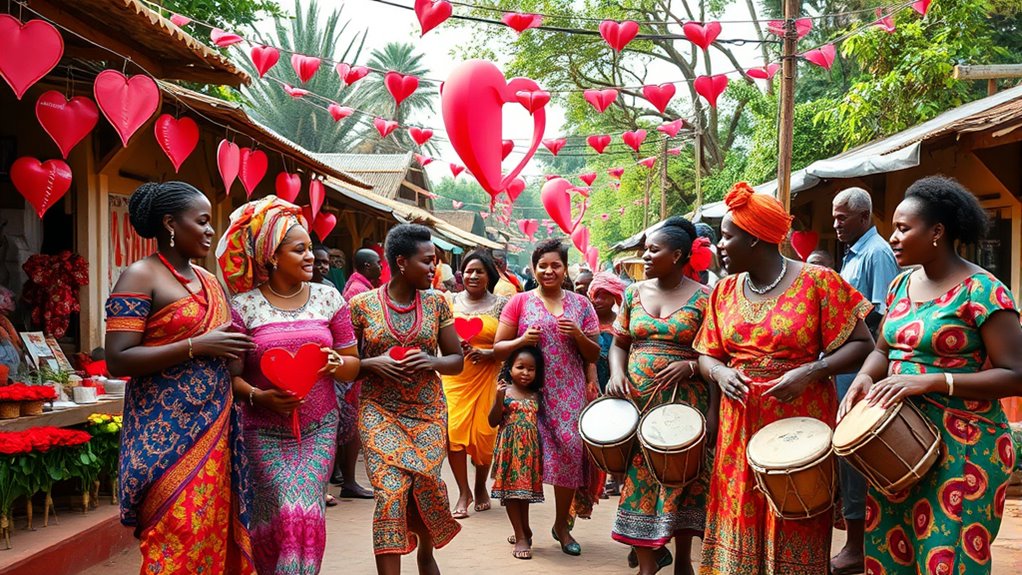
In many African communities, love is celebrated through traditional rituals that connect people to their cultural roots. Community events and festivals often bring neighbors together to honor relationships in unique ways. You’ll also notice that gift-giving customs vary widely, reflecting local values and beliefs about love and affection. Additionally, some communities incorporate beekeeping practices into their festivities, emphasizing the importance of honey and bees in cultural symbolism. These practices often symbolize sweetness and unity, reinforcing social bonds during celebrations. Moreover, Aboriginal art dot techniques are sometimes used in decorative elements of celebrations to convey stories and cultural identity. The incorporation of cultural symbolism in these rituals strengthens community bonds and preserves traditional identities. The use of skincare rituals, such as applying traditional eye patches, can also be part of personal care during these festivities, highlighting the significance of beauty and well-being.
Traditional Love Rituals
Many African communities have unique love rituals that reflect their rich cultural heritage. These customs often involve symbolic gestures that deepen emotional bonds and honor tradition. For example, some groups perform elaborate dances or songs to express affection, while others exchange handcrafted tokens of love. These rituals are more than mere customs—they’re powerful expressions of cultural identity rooted in history. Additionally, some communities incorporate elements of spiritual connection to strengthen bonds and celebrate love’s significance within their cultural context. The significance of electric power in supporting these traditions highlights how modern innovations can complement traditional practices and foster community bonds.
Community Celebrations and Events
Across various African communities, love is often celebrated through vibrant festivals and local events that bring people together in joyful expression. These gatherings feature lively music, dance, and colorful parades, creating an atmosphere of unity and celebration. In some regions, communities organize special performances or traditional ceremonies that highlight love’s significance, blending modern influences with cultural practices. Local markets may also host communal feasts, where families and friends share meals and exchange warm greetings. These events foster a sense of belonging and reinforce community bonds, emphasizing love’s role beyond romantic relationships. By participating in these festivals, you experience a collective appreciation of love’s importance, celebrating it as a essential part of cultural identity and social harmony.
Unique Gift-Giving Customs
During African festivities and local celebrations, gift-giving plays an essential role in expressing love and appreciation. You might see heartfelt tokens exchanged that symbolize affection and respect. Here are some unique customs you could encounter:
- Handcrafted jewelry or beads – These are often given to symbolize unity and love.
- Fruit baskets or traditional foods – Sharing local delicacies emphasizes community bonds.
- Cloth or fabric gifts – Bright, colorful textiles are given to signify good fortune.
- Personalized handmade crafts – Reflecting effort and personal touch, these gifts convey genuine affection.
These customs highlight cultural values and deepen connections beyond words, making Valentine’s Day a moment of meaningful exchange rooted in tradition.
Valentine’s Day in Australia and Oceania
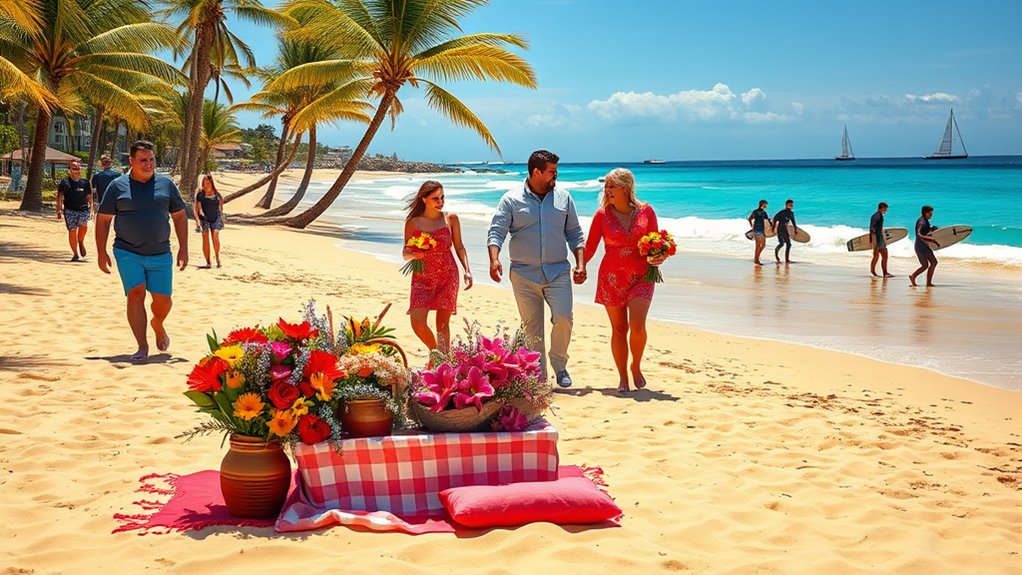
Have you ever wondered how Australians and Oceanians celebrate Valentine’s Day? In these regions, the day is marked by exchanging gifts, romantic dinners, and heartfelt messages. Many people send cards, often decorated with native flowers like waratahs or proteas, to express love. Restaurants and cafes become popular spots for couples to share special meals, sometimes featuring local seafood or tropical fruits. In Oceania, especially in countries like New Zealand and Fiji, Valentine’s Day also includes community events and celebrations that emphasize friendship and unity. Some places host outdoor festivals or concerts, creating festive atmospheres. Overall, the celebration reflects a blend of modern romance and regional traditions, making Valentine’s Day a warm and joyful occasion across Australia and Oceania.
Religious and Historical Significance of the Day
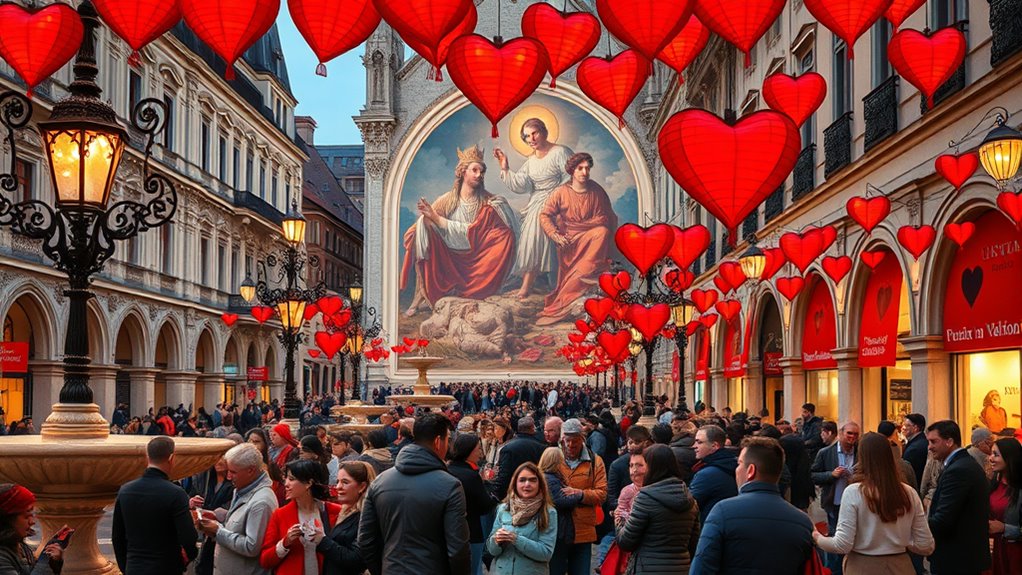
Valentine’s Day’s origins are deeply rooted in religious and historical traditions that go beyond the modern expressions of love. You should know that the day traces back to ancient Roman festivals honoring Saint Valentine, a priest who secretly married couples to protect them from Roman bans. Over time, the day was associated with Christian martyrdom and became a celebration of love and sacrifice. To give you a clearer picture, here are some key points:
- Roman festival of Lupercalia, celebrating fertility and love.
- Saint Valentine’s martyrdom, symbolizing devotion.
- Early Christian traditions linking love to faith and sacrifice.
- The shift from pagan to Christian observances, integrating the day into religious calendars.
These roots highlight its historical significance beyond romantic customs.
Gift-Giving Customs Around the World
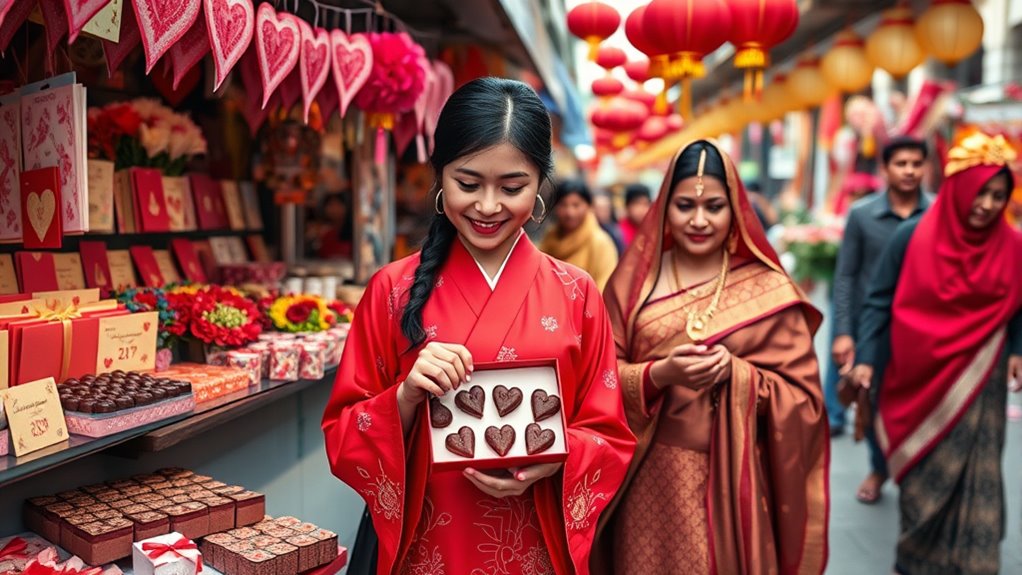
Gift-giving customs on Valentine’s Day vary widely across the globe, reflecting cultural values and traditions. In some countries, like Japan, women give chocolates to men, with specific categories—“giri-choco” for acquaintances and “honmei-choco” for loved ones. In contrast, Western countries often see couples exchanging flowers, jewelry, or heartfelt cards. In Italy, giving elaborate handmade gifts or romantic dinners is common, emphasizing personal touch. Meanwhile, in some Middle Eastern nations, gift exchanges are more reserved, often involving flowers or small tokens to respect cultural norms. You might also notice that in certain cultures, gift-giving is more formal, while others embrace spontaneous acts of kindness. No matter where you are, understanding local customs guarantees your gesture is appreciated and meaningful.
Modern Trends and Social Media Influence

Social media campaigns now shape how people celebrate Valentine’s Day, making it more public and interactive. Digital gift giving and virtual love challenges have become popular ways to connect and share affection online. These trends are transforming traditional celebrations into global social media phenomena.
Social Media Campaigns
Have you noticed how social media campaigns have transformed Valentine’s Day celebrations around the world? They now shape how people share love and connect globally. These campaigns often go viral, inspiring millions to participate. Think about:
- Hashtag Challenges – People create and share themed posts, spreading love messages worldwide.
- Influencer Promotions – Influencers showcase creative ways to celebrate, influencing popular trends.
- User-Generated Content – Many share personal stories or photos, making the holiday more personal and inclusive.
- Virtual Events – Online parties, contests, and live sessions bring people together, regardless of location.
This digital approach amplifies the holiday’s reach and makes it more interactive. You’re not just celebrating with loved ones locally—you’re part of a global movement fueled by social media.
Digital Gift Giving
Digital gift giving has become a popular way to celebrate Valentine’s Day, especially with social media’s influence shaping modern trends. You can now send e-cards, virtual flowers, or online gift cards instantly, making it easier to surprise your loved ones across the globe. Social media platforms often feature customized digital gifts, like personalized videos or digital art, which add a personal touch. Many people opt for e-gift cards to favorite stores or subscription services, allowing recipients to choose what they want. This trend also encourages creative expressions such as animated messages or interactive experiences shared online. Digital gifts offer convenience, immediacy, and a modern way to show your affection, fitting seamlessly into the fast-paced, connected world we live in today.
Viral Love Challenges
Viral love challenges have taken over social media, transforming Valentine’s Day into a dynamic digital phenomenon. You’ll see couples and singles alike participating in fun, often silly, activities that spread quickly online. These challenges boost engagement and create shared experiences worldwide. Here are some popular examples:
- Love Letter Challenge – Writing heartfelt messages and sharing them publicly.
- Couples’ Dance Challenge – Posting synchronized dance videos with your partner.
- Secret Gift Swap – Sending anonymous gifts and revealing identities later.
- Memory Sharing – Posting photos and stories from memorable moments together.
These trends make the holiday more interactive, allowing you to connect with others and celebrate love in creative ways across social platforms.
Regional Variations and Emerging Practices
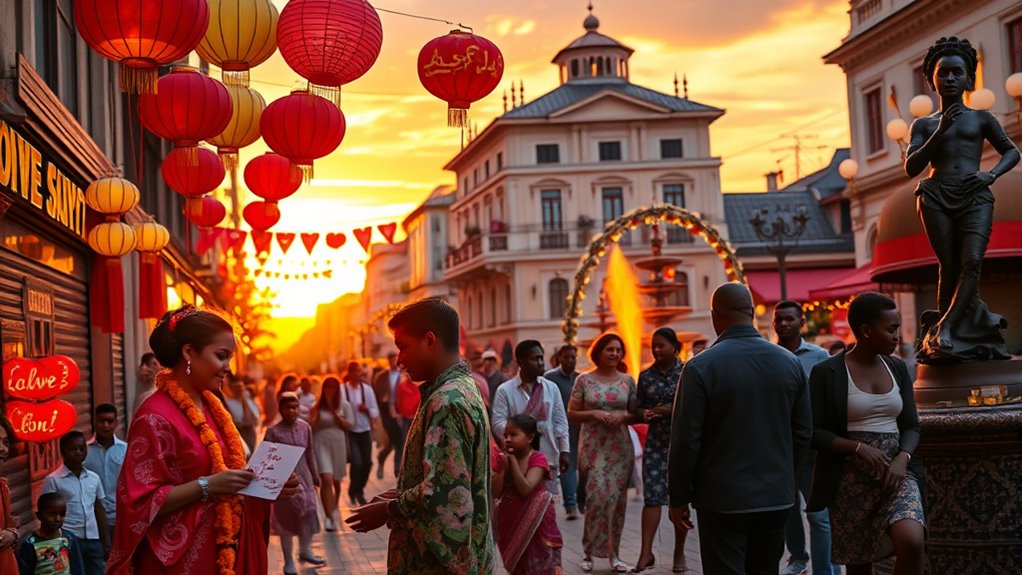
Across different regions, Valentine’s Day customs vary widely, reflecting local cultures, traditions, and social norms. In Japan and South Korea, women often give chocolates to men, with a follow-up “White Day” where men reciprocate. In Brazil, the celebration extends to “Dia dos Namorados” on June 12, emphasizing romantic dinners and gifts. In Finland and Estonia, friends exchange “Friendship Day” cards, blending love and friendship. Emerging practices include virtual celebrations, especially during the pandemic, where couples share online dates and send digital gifts. Some countries incorporate local symbols, like lanterns in China or floral displays in the Philippines. These variations highlight how Valentine’s Day adapts to regional identities while evolving with modern trends, creating diverse yet meaningful expressions of love worldwide.
Frequently Asked Questions
How Do Different Cultures Interpret the Romantic Significance of Valentine’S Day?
You might wonder how different cultures see Valentine’s Day’s romantic meaning. In some places, it’s a big celebration where couples exchange gifts and express love openly. In others, it’s more about friendship or family bonds. You’ll find that traditions vary—like Japan where women give chocolates, or Finland where it’s called Friend’s Day, emphasizing friendship over romance. Each culture shapes its own unique way of honoring love on this day.
Are There Countries Where Valentine’S Day Is Not Celebrated at All?
Imagine a world without roses or love notes—some countries, like Saudi Arabia and Pakistan, don’t celebrate Valentine’s Day at all. You won’t see widespread gestures or commercial displays there because cultural or religious beliefs often discourage such festivities. Instead, they focus on other traditional celebrations or personal expressions of affection. So, if you’re in these places, don’t expect Cupid’s arrow to strike on February 14th.
What Are Some Unique Non-Romantic Ways People Observe Valentine’S Day Globally?
On Valentine’s Day, you might explore unique non-romantic traditions around the world. In Japan, women give chocolates to friends and colleagues, celebrating friendship and appreciation. In Finland, it’s called Friend’s Day, focusing on honoring friends rather than lovers. In some parts of India, people organize community feasts and cultural events. These diverse customs show that Valentine’s Day can be about celebrating all meaningful relationships, not just romantic love.
How Do Age Groups Celebrate Valentine’S Day Differently Around the World?
Did you know that teenagers make up nearly 50% of Valentine’s Day gift givers worldwide? As you observe different age groups celebrating, you’ll notice teens often exchange playful cards and social media posts, while adults focus on romantic dinners and heartfelt gifts. Older generations might emphasize family connections with handmade crafts or community events. You can see how each age group adds its unique touch, creating diverse and meaningful celebrations across cultures.
What Are Common Misunderstandings About Valentine’S Day Customs in Various Countries?
You might think Valentine’s Day customs are universal, but many misunderstandings exist. For example, some believe it’s solely about romantic love, yet in many countries, it celebrates friendship or family. People often assume everyone exchanges gifts the same way, but traditions vary widely—like Japan’s women giving chocolates or Brazil’s emphasis on mass celebrations. Recognizing these differences helps you appreciate the diverse ways cultures honor love and affection worldwide.
Conclusion
As you explore how Valentine’s Day unfolds around the world, you realize that love’s universal language often surprises us in the most unexpected ways. From the heartfelt gift exchanges in Tokyo to carnival-inspired celebrations in Latin America, it’s clear that this day mirrors our shared desire for connection. Maybe, in the end, the most surprising coincidence is how, despite different customs, we all seek to celebrate love’s timeless magic in our own unique, beautiful ways.