Red is the color of Valentine’s Day because it symbolizes love, passion, and emotional intensity, with deep roots in history and culture. In ancient times, red represented desire, protection, and vitality across many civilizations. Today, it’s linked to romance through symbols like roses and hearts, and its boldness sparks excitement and intimacy. Its significance varies worldwide, making red a universal emblem of love. Keep exploring to discover how red’s rich symbolism continues to enchant Valentine’s Day celebrations everywhere.
Key Takeaways
- Red symbolizes love, passion, and desire, making it the perfect color for expressing romantic feelings on Valentine’s Day.
- Historically, red has been associated with romantic love in European traditions since medieval times.
- Red roses and heart-shaped decorations are common symbols of affection, reinforcing red’s romantic significance.
- Cultural variations, like in China and India, link red to prosperity, purity, and fertility, enriching its romantic symbolism.
- The bold and energetic nature of red stimulates emotions and attracts attention, enhancing the day’s romantic atmosphere.
The Historical Roots of Red in Romantic Traditions

The color red has long been associated with love and passion, dating back centuries in various romantic traditions. You’ve probably seen red used in courtship rituals and celebrations throughout history. In medieval Europe, red garments symbolized love and desire, often worn by lovers during courtship. The color also appeared in Renaissance art, illustrating romantic themes. Red’s connection to romance grew stronger during these times, representing emotion and intensity. Its vivid hue caught attention and conveyed deep feelings easily. Over the centuries, red became a universal symbol of love, used in everything from romantic letters to decorative elements at celebrations. This historical significance laid the foundation for red’s enduring role in Valentine’s Day traditions today. Additionally, the use of digital platforms in modern celebrations has helped spread and reinforce red’s association with love worldwide.
Red’s Symbolism in Ancient Cultures

Across many ancient cultures, red symbolized powerful ideas like life, energy, and protection. You’ll find that civilizations used red to represent essential elements and divine forces. For example:
Red across ancient cultures symbolized life, energy, protection, and divine power.
- In Ancient Egypt, red was linked to chaos and danger but also to strength and vitality.
- The Chinese associated red with good fortune, joy, and celebration.
- Native American tribes saw red as a symbol of life force and spiritual power.
These cultures believed red could ward off evil, invoke strength, or bring prosperity. Its vibrant hue carried deep meanings beyond mere appearance, serving as a bridge between the physical and spiritual worlds. Additionally, red’s significance is also reflected in cultural symbolism, where its intense color embodies emotion and vitality, reinforcing its importance across societies. The psychological impact of red is also notable, as it can evoke strong feelings and influence behavior. Furthermore, red was often used in rituals and ceremonies, underscoring its sacred and powerful role in ancient practices. In many traditions, red was thought to protect against evil spirits, further emphasizing its spiritual significance. Recent studies also show that red can increase aggression and excitement, highlighting its powerful influence on human psychology. Understanding this rich symbolism helps you appreciate why red became so significant across different societies.
The Connection Between Red and Passion
Red’s vibrant hue has long been associated with intense emotions, especially passion. When you see red, your mind often links it to desire, energy, and excitement. This connection isn’t accidental; cultures worldwide have linked red with fiery feelings that ignite love and attraction. This association is reinforced by the fact that divorce statistics show how emotional cues like color can influence human behavior and decision-making, making red a powerful tool in romantic contexts. The boldness of red can stimulate your senses and stir your deepest passions. It’s no surprise that red is the color of passion in art, fashion, and romance. To help you understand this link better, here’s a quick overview: emotional response. Interestingly, the AI security research highlights how emotional cues like color can influence human behavior and decision-making, making red a powerful tool in romantic contexts. Additionally, the popularity of Nike Tech in Sneaker Culture 2024 demonstrates how vibrant colors like red are used to create bold, eye-catching designs that evoke excitement and confidence. Moreover, cultural symbolism of red plays a significant role in how different societies interpret this passionate hue, further deepening its association with love and desire.
Red as a Sign of Love and Affection
Red often signals love and affection, making it a universal symbol of deep emotional connection. When you see red, it instantly communicates warmth and care. This color is often used to express your feelings without words. To understand its significance, consider these points: 1. Romantic gestures: Giving red roses or heart-shaped gifts shows your love clearly. 2. Emotional warmth: Wearing red or decorating with it creates an inviting atmosphere of closeness. 3. Symbol of commitment: Red signifies a sincere bond, reminding both of you of shared affection and devotion. Additionally, incorporating cultural symbolism like red in celebrations further emphasizes its importance in expressing love. The 16PF personality traits associated with warmth and social engagement often align with the reasons why red is chosen to symbolize love and affection. Recognizing the cultural and historical significance of red enhances its role as a powerful expression of emotion. For example, the sacred rituals involving red hues in various traditions highlight its enduring connection to heartfelt sentiments.
The Influence of Literature and Art
You can see red’s power in romantic paintings that symbolize passion and desire. Literary works often reference red to evoke love or intensity, shaping how we comprehend these emotions. Artistic movements like Fauvism and Expressionism emphasize red to express bold feelings and energetic vitality. Additionally, the prominence of red in Modern Toilet designs highlights its association with modernity and innovation. Moreover, the use of color symbolism in various art forms underscores red’s role in conveying powerful emotional messages.
Romantic Symbolism in Paintings
Romantic symbolism in paintings often draws heavily from literature and art to evoke deep emotional responses. You can see this through visual elements that express love, longing, and passion. For example:
- Use of color – deep reds and soft pinks highlight romance and intimacy. The emotional power of color plays a critical role in shaping the viewer’s perception and feelings toward the artwork.
- Imagery – lovers often appear in tender embraces or gazing into each other’s eyes.
- Symbolic objects – roses, hearts, and doves reinforce themes of love and devotion.
- Artistic techniques – the fusion of imagination and expertise ensures the creation of innovative spaces that reflect emotional depth and cultural significance. Additionally, the use of symbolic color schemes enhances the emotional impact and narrative depth of the artwork.
- The incorporation of WWE Raw’s financial impact in modern visual storytelling can also influence how romantic themes are portrayed, adding a layer of cultural context to the artwork.
- Understanding drivetrain components, such as gears and tires, can help artists and viewers alike appreciate the mechanical intricacies that may be subtly incorporated into certain romantic artworks.
Literary References to Red
Literature and art have long intertwined to shape our understanding of red as a symbol of passion, desire, and intensity. You’ll find red vividly portrayed in classic works, from Shakespeare’s fiery characters to Poe’s haunting imagery. Writers use red to evoke strong emotions, such as love and anger, making scenes more visceral. In poetry, red often signifies longing or sacrifice, like in Christina Rossetti’s works. Literary references deepen red’s association with romance, highlighting its power to evoke both tenderness and danger. As you explore stories and poems, you see red not just as a color, but as an emotional catalyst that captures the complexity of human passion and desire—perfectly fitting for Valentine’s Day. Additionally, the cultural symbolism of red varies across different societies, enriching its significance in romantic expressions. Understanding the relationships in literature can reveal how emotional bonds are portrayed and how they influence our perception of love and passion. Furthermore, the use of color symbolism in art enhances the emotional impact of visual storytelling, reinforcing red’s role as a potent symbol of love and fervor. Recognizing the psychological effects of red can also deepen our appreciation of its ability to stimulate feelings of excitement and intimacy.
Artistic Movements Emphasizing Red
Throughout history, artists have harnessed the power of red to evoke emotion and provoke response, much like writers do with words. Red has played a central role in various artistic movements that challenge norms and express passion. For example:
- Fauvism uses bold, unrestrained red strokes to convey intense emotion.
- Expressionism employs red to depict inner turmoil and psychological depth.
- Abstract Expressionism features red as a symbol of energy, revolution, and vigor.
In each movement, red becomes more than a color; it’s a tool to communicate powerful feelings and ideas. Your understanding of red’s influence in art deepens as you see how these movements use it to inspire, provoke, and captivate audiences across time.
Red in Modern Valentine Celebrations
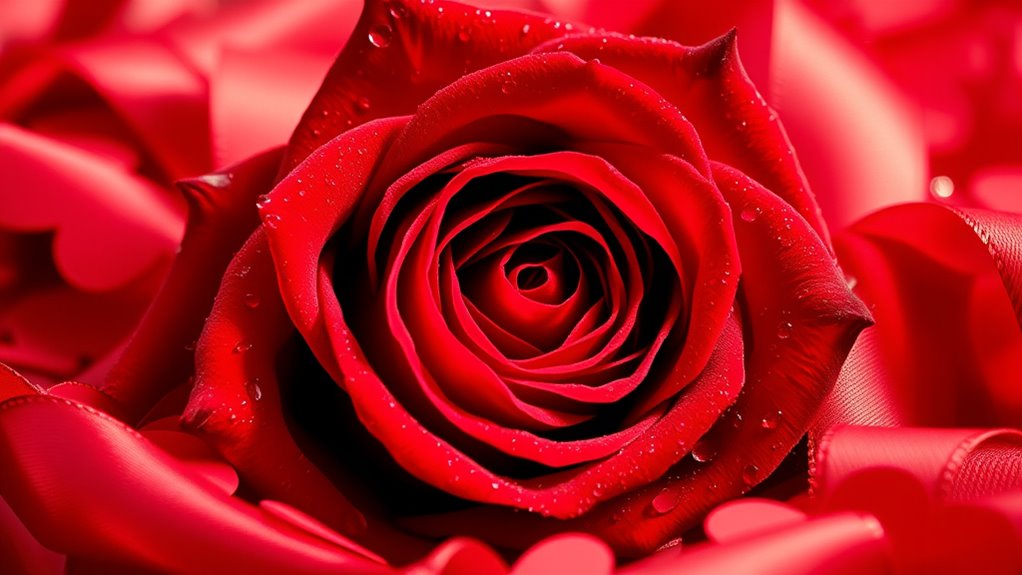
Red remains the dominant color in modern Valentine’s Day celebrations, symbolizing love and passion with striking immediacy. When you choose red flowers, heart-shaped gifts, or decorations, you instantly convey affection and desire. Red cards and envelopes often contain heartfelt messages, emphasizing emotional connection. Retailers heavily feature red in sales campaigns, encouraging you to buy chocolates, jewelry, and apparel that evoke romance. Wearing red yourself can boost feelings of confidence and attract attention from loved ones. Social media is flooded with red-themed posts, from romantic dinners to red lingerie, amplifying the day’s passionate tone. Overall, red’s vibrant presence in modern celebrations fosters a sense of urgency and intensity, making Valentine’s Day an unmistakably passionate occasion.
Cultural Variations of Red’s Significance

As red dominates modern Valentine’s Day celebrations in many cultures, its meaning shifts across different societies. In some places, red symbolizes love and passion, while elsewhere, it signifies luck or prosperity. For example:
- In China, red is associated with good fortune and is widely used during celebrations, including Valentine’s Day.
- In Western countries, red primarily represents romantic love and desire.
- In India, red is linked to purity and fertility, often featured in wedding ceremonies and romantic rituals.
Understanding these variations helps you appreciate how red’s significance adapts globally. It’s not just a universal symbol of love but also a reflection of cultural values and traditions. Seeing red in different contexts reminds you of its diverse meanings beyond Valentine’s Day.
Frequently Asked Questions
How Did Red Become Associated With Valentine’s Day Globally?
You might wonder how red became the symbol of Valentine’s Day worldwide. Historically, red represents love, passion, and romance across many cultures. It gained popularity through the influence of Christian traditions, the association with the heart, and the commercialization of the holiday. Companies used red in marketing, making it a universal color for love and affection. Over time, this vibrant hue became inseparable from the celebration of romantic relationships globally.
Are There Any Health Benefits Linked to the Color Red?
Red isn’t just eye-catching; it can boost your mood and energy levels remarkably. When you see red, your heart rate might even increase slightly, making you feel more alert and motivated. Some studies suggest it can stimulate appetite and enhance confidence. So, next time you wear red or surround yourself with it, remember you’re tapping into a color that can energize and uplift your spirit in extraordinary ways.
How Do Different Cultures Interpret the Color Red Besides Love?
You’ll find that cultures interpret red in diverse ways beyond love. In China, red symbolizes luck, prosperity, and happiness, often seen during celebrations like Lunar New Year. In India, red represents purity and fertility, used in weddings and religious ceremonies. In Western societies, red can also signify danger or warning. Recognizing these cultural meanings helps you appreciate red’s rich symbolism worldwide, beyond just romantic connotations.
Why Do Some Countries Prefer Pink Over Red for Valentine’S Day?
Imagine a delicate blossom, soft and inviting, that’s why some countries favor pink over red for Valentine’s Day. Pink embodies tenderness, innocence, and playfulness, making it perfect for expressing gentle affection. You might see it as a whisper of love rather than a blazing fire. In these cultures, pink’s subtle charm captures hearts without overwhelming, offering a sweeter, more approachable symbol of love that resonates deeply.
Can Red’s Symbolism Vary Based on Different Shades or Tones?
You might notice that red’s symbolism shifts with its shade. Bright, vivid reds often represent passion, love, and energy, making them perfect for romantic occasions. Darker reds, like burgundy, convey elegance, sophistication, or even a sense of mystery. Lighter reds or pinks tend to symbolize tenderness and affection. So, depending on the tone or message you want to send, choosing the right shade of red can deepen your expression of feelings.
Conclusion
Now that you know why red became the symbol of love, it’s fascinating to realize that over 50% of Valentine’s Day gifts feature the color. Whether it’s roses, chocolates, or cards, red’s passionate symbolism still shines through today. When you give or receive something red on this special day, you’re part of a centuries-old tradition celebrating love’s fiery spirit. So, embrace the color that’s truly at the heart of Valentine’s Day!